
By Dr. W.A.S. Sarjeant, FGS.
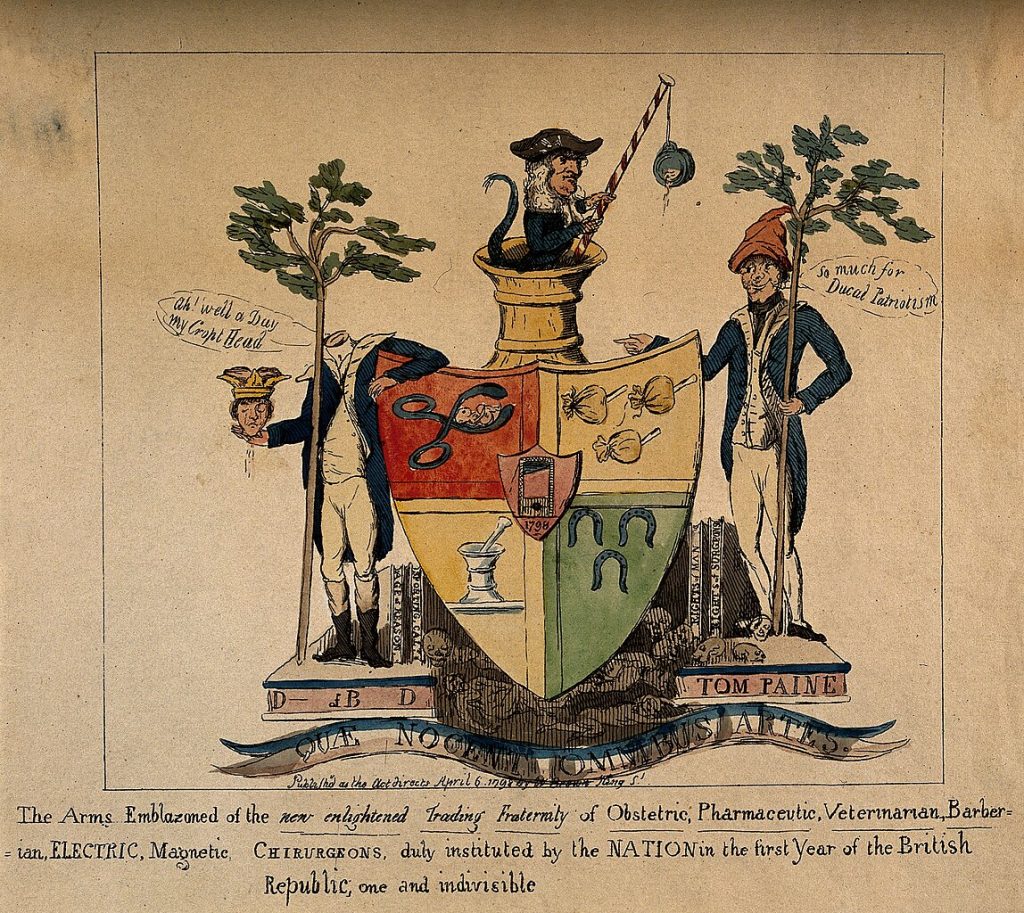

To hear “God save great Thomas Paine” sung on an English stage is surely a rare experience, verging on the unique. This was the privilege of the audiences at Sheffield Playhouse recently, during the presentation of “The Stirrings in Sheffield on Saturday Night”, a sort of documentary with music written by Alan Cullen.
The setting was in Sheffield of the 1860’s, an unhappy time when the emergent trades unions were struggling for survival in the teeth of adverse legislation. Their efforts were directed to the maintenance of the level of wages and the support of the unemployed by levies on those actually working. In this aim, harsh measures were often resorted to in dealing with anyone who undercut the accepted rates of pay, employed a disproportionate amount of apprentice labour, produced shoddy goods, or otherwise menaced the livelihood of his fellows. First of all, warning letters (often with a feminine signature, such as “Mary Ann”) were delivered; if this failed, the tools and gear of the offender were removed or put out of action – a procedure called “rattening”. If this failed. the offender was likely to find his home or premises blown up by gunpowder, or himself disabled by being beaten up or shot.
Behind much of this violence loomed the figure of “Auld Smectum” (“Old Smite-Em”), an epithet cloaking the identity of William Broadhead, the Secretary of the Saw Grinder’s Union. Broadhead, the licensee of the Royal George Inn in Carver Street, was well-read, intelligent, and wholly devoted to the interests of trade unionism, apparently for wholly altruistic reasons. Although reluctant to resort to it, he was convinced that violence was necessary under the circumstances then prevailing. His agents were Samuel Crookes and James Hallam; their activities culminating in the inadvertent killing of James Linley (a cutler who had made overmuch use of apprentice labour), brought about a reign of terror. Extra constabulary were drafted in from outside Sheffield; their presence was in the highest degree unwelcome, and one scene depicted the breaking-up of a resentful crowd who were defiantly singing “God save great Thomas Paine.
Ultimately, a newcomer to the town, William Leng, was appointed Editor of the Sheffield Telegraph; undeterred by the atmosphere of hostility and fear then prevailing, he assembled enough evidence of violence to bring about the establishment of a Royal Commission of Enquiry. In order to get to the roots of the troubles, the Commission offered, to anyone willing to give evidence, a certificate of immunity from prosecution for offences committed. James Hallam was frightened into a confession; and Broadhead, to save himself, had to admit his deeds.
Though no prosecution followed, the local magistrates would not permit Broadhead to renew his licence as a publican, and he was unable to get other work. His friends organised a benefit at a local music hall, enabling him to emigrate to the United States; some years later he returned to Sheffield, dying at Upperthorpe in 1879.
“The Stirrings…” was a brilliant evocation of a troubled era, the character of Broadhead (played by Wilfred Harrison) being portrayed very sympathetically. Light relief was provided by an interwoven second plot (chronologically inexact, since a decade earlier) about the unsuccessful attempts at launching a Consumer’s Gas Company by Councillor Isaac Ironside. Excellent sets and a leavening of songs, some of the era and some specially written, brought the story spiritedly to life; most memorable was the grim folksong, “The Grinder’s Hardships”, including these verses :
“To be a Sheffield grinder, it is no easy trade.
There’s more than you’d imagine in the grinding of a blade.
The strongest man among us is old at thirty-two,
For there’s few who brave the hardships that we poor grinders do.
“And every working day we are breathing dust and steel,
And a broken stone can give us a wound that will not heal. There’s many an honest grinder ground down by such a blow,
For there’s few that brave such hardships as we poor grinders do.
“Thus many a poor grinder whose family is large
With all his best endeavours cannot his debts discharge.
When children cry for bread, how pitiful the view,
Though few can brave such hardships as we poor grinders do.”
This brings home the reality of that period and provides justification for the deeds of men like Broadhead. Their reward was to see the beginnings of recognition for the Unions.
“The Stirrings…” was first performed on May 31st.,1966; the acclamation with which this was received brought performances on July 22nd., and 23rd., and it is understood that further performances will open the Sheffield Repertory Co’s Autumn season.