
by Alfred Owen Aldridge

IN the midst of the controversy over Silas Deane’s negotiations with the French government, the most sensational political scandal of the American Revolution, Thomas Paine brought forth several satirical pieces in verse and prose under a new pseudonym, Comus. Deane had been accused by his fellow commissioner Arthur Lee of using his official position for person- al gain. Although Congress instituted various official investigations, Deane’s case was virtually tried in the newspapers, and Paine as Common Sense served as public prosecutor.
For a year after Deane’s appeal to the public for vindication in December, 1778, the newspapers carried literally hundreds of letters and essays supporting or attacking him. The controversy grew to comprise not only Deane’s foreign negotiations, but all forms of war profiteering, real and alleged. Paine, at the outset became Deane’s most vociferous accuser and, in turn, the butt of retaliatory attacks by the Deane supporters. By adopting a new pseudonym, Comus, Paine was enabled to proliferate his offensives to attack his enemies openly and soberly under his customary pseudonym, Common Sense, and to ridicule them under one that was unknown. In this way, he was sure to get a sympathetic hearing from those who were indifferent or even antagonistic to his reputation, as well as from those who habitually followed his lead. Common Sense and Comus sound somewhat alike, and it is not strange that Paine should have thought of Comus as an alternative pen name. Also, he was aware of the classical association of Comus with fun and revelry, for he consistently reserved this pseudonym for works of satire and burlesque.
From a belletristic standpoint, one of the most interesting works in Paine’s entire career is an essay signed Comus in the Pennsylvania Packet (March 16,1779) in which Paine ridicules the prose style of two literary Congressmen in the Deane camp, William Henry Drayton of South Carolina, and Gouverneur Morris of New York.
Before discussing the content of this essay, however, it is necessary to show that Comus was actually Thomas Paine. First of all, Paine used the pseudonym Comus at another stage of his career – on his return to America after his ten-year sojourn in France as member of the French Convention, as journalist and amateur diplomat. On August 23,1804, he published in the Philadelphia Aurora a burlesque of Federalist eulogies of Alexander Hamilton under the title “Nonsense from New York.” This was signed Comus. In two extant personal letters to publishers Paine admits authorship, Writing to Elisha Babcock, publisher of the Hartford American Mercury, August 27,1804, he refers to “a piece of mine signed Comus and entitled Nonsense from New York, “. and writing to William Duane, publisher of the Aurora, September 19, 1804, he complains, “In the last piece I sent you signed Comus, you abridged some of the expressions.”
Identification of the Revolutionary satire on the style of Drayton and Morris is almost as precise, although it comes from one of Paine’s enemies rather than Paine himself. Four months after the essay by Comus, an anonymous poem appeared in another newspaper (Pennsylvania Evening Post, July 16,1779), abusing Paine for his defense of the Lees against Silas Deane:
HAIL mighty Thomas! In whose works are seen
A mangled Morris and distorted Deane;
Whose splendid periods flash for Lees defense,
Replete with every thing but common sense.
Both of Paine’s pseudonyms are introduced, the notorious Common Sense and the unknown Comus:
In pity tell, by what exalted name
Thou would’st be damned to eternal fame.
Shall Common Sense, or Conus greet thine ear
A piddling poet, or puft pamphleteer.
And the identification is completed by an allusion to the particular essay ridiculing literary style:
And Eager to traduce the worthiest men,
Despite the energy of Drayton’s pen.
This couplet could hardly refer to anything but the essay in question, for Drayton, unlike Morris, remained relatively untouched by personal controversy, he was not a prolific writer, and condemnation of an opponent’s literary style was a rare weapon in Revolutionary polemics. It is scarcely conceivable that there existed another take-off by Paine or anyone else on Drayton’s writing.
Paine’s main affair was with Morris, a personal enemy, and he probably included Drayton in his squib only because Drayton served with Morris on many committees of Congress and also belonged to the Deane faction. Both Drayton and Morris had recently composed answers to British proclamations, Drayton a pamphlet reply to a speech of George 111, and Morris a newspaper reply to a speech by Governor George Johnstone, recently sent to America as a joint commissioner to treat with the colonies. His title of governor was one of courtesy, presumably applied because he had once been appointed governor of West Florida.
Paine described the productions of George 111 and Drayton as “a dead match of dulness to dulness,” but otherwise limited his satire to a single sentence in Drayton’s pamphlet and to its physical appearance: “ornamented like an ale-house-keeper’s sign, with the letters W.H.D.” Paine felt that the terms in which Drayton opened his address to the King were ludicrous: “Your royal voice to your Parliament on the 27th of November last, has at length, reached the ears of freemen on the western shore of the Atlantic.” Paine exposed the absurdity of referring to the passage of the King’s voice across the Atlantic to the ears of America, a journey which had required nine days but should have taken only four hours, according to Paine’s estimate of the velocity of sound.
Paine dismissed Drayton with the N.B., “The Devil backs the King of England, and S. Deane backs W.H.D. because he has good ‘ears,’ and they are not ‘shut.” This is a reference to Deane’s plaint at the outset of his cause celebre that the ears of Congress had been shut against him.
Two years before writing this criticism of Drayton’s rhetoric, Paine in his Crisis No.3 had publicly praised one of Drayton’s other works, his charge to the grand jury for the district of Charleston in April, 1776. Paine said that it was written “in an elegant masterly manner” and described it along with the address of the convention of New York as”pieces, in my humble opinion, of the first rank in America,” one of the rare passages in Paine’s works in which he pays tribute to a fellow author. His approbation is understandable, however, for Drayton in his charge had not only supported the principles of Paine’s Common Sense, but had also warmly praised the work.
Paine was in a sense repaying a debt. Later, when he found Drayton associated with his opponents, the Deane faction, Paine changed his opinion of his literary style.
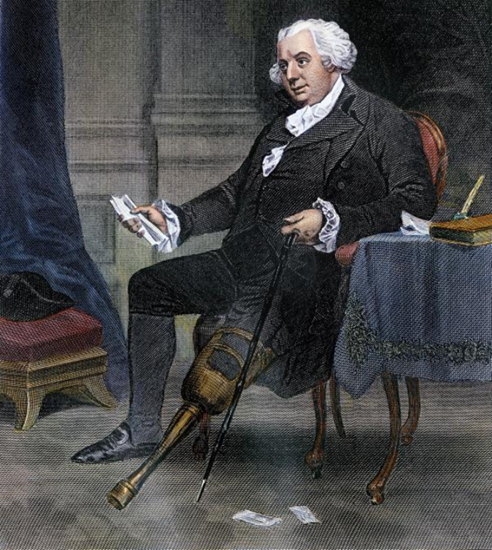
In turning to Gouverneur Morris, Paine opened up the full force of his satire. He was affected to forget Morris’ surname and spelled his given name as “Governeer.” Since Morris had written against Governor Johnstone, Paine was able to deride the mighty contention between Governor and the Governor. Johnstone in his speech had declared that “the maxim of dying in the last ditch was his principle,” and Morris had undertaken to ridicule the application of the maxim to the American war. Paine, without saying anything in Johnstone’s favour, sought to reduce Morris’ literary achievement to pretentious flummery.
Since Paine’s essay is fundamentally an analysis of literary humor, one may logically raise the question, why, in the midst of the rancorous controversy over Silas Deane during which Paine wrote at least thirty or forty disputatious pieces for the newspapers, did he take time to write at length on a purely literary subject? There is a measure of truth in the explanation which Paine himself offered to account for the vigor of his satire on the works of rival authors: “not only because such gasconade productions take away from that character of modern and serious fortitude which America has hitherto supported, and that without even giving wit in its place; but because they have a tendency to introduce a false taste among youth, who are too apt to be catched by the extravagance of a figure without considering its justness.” It may seem inconsistent for Paine to be supporting “modern and serious fortitude” in a work devoted exclusively to burlesque. Also, a large proportion of Paine’s other work, both during the Revolution and after, consists of unrelieved satire. It may be that he recognized a distinction between subjects of national importance and others of merely local or individual significance and considered that only the latter could be treated in a comic or frivolous vein.
Paine may also have singled out Drayton and Morris because they were joint authors of a Congressional report, Observations on the American Revolution, which Paine disapproved of because it slighted the importance of the military action at the very beginning of the war. Four days after his Comus essay, Paine published a serious condemnation of the material, in this report, which he signed with his usual pseudonym, Common Sense.
Paine used still other pseudonyms in addition to Comus and Common Sense. An opponent in the Pennsylvania Evening Post (January 7, 1777) described him as a”voluminous author,” appearing to the public “in three characters” a “Proteus of a being, who can not only change his shape and appearance, but can divide and subdivide his own identity.” According to this critic, the maneuvering of Paine, a “self-created multitude of an author,” resembled the tactics of General Burgoyne, who allegedly changed his ground when he could not maintain a post.
At first glance, it may seem surprising that Paine’s contemporaries should have been aware of his identity as Comus, but that the circumstance should not have been registered in literary history until the twentieth century is still more surprising. Actually, this can easily be accounted for. Even before the end of the Revolution Paine spoke of collecting and publishing his literary works, and the project remained in his mind throughout his life, but he was never able to carry it out. And even had he made the attempt, it probably would have been difficult after his return from France to reassemble the newspapers of the Revolutionary decade in which his multitudinous essays had appeared. No collection of his miscellaneous works appeared during his lifetime, and that which appeared after his death, and on which all subsequent editions are based, was composed largely on the authority of one of Paine’s later acquaintances in New York. In addition to the Comus pieces, there are scores of Paine’s newspaper essays which have never been collected or identified in print. Paine did not even supervise a complete edition of his Crisis papers. The version which appears in editions of his works was not assembled by Paine himself, and even to this day there are various doubts about which of his writings he intended to represent as No.10.
The Crisis, of course, had ineffably greater influence than the Comus piece satirizing Drayton and Morris, but the latter gives us a new insight into the human side of Revolutionary polemics and reveals that Paine had formulated conscious aesthetic principles for his writings.
References
- The relationship of the international aspects of the Deane affair to local Philadelphia profiteering is discussed in A.0.Aldridge, Man of Reason: The Life of Thomas Paine (London, 1960), 64-77.
- Richard Gimbel, “New Political Writings by Thomas Paine,” Yale University Library Gazette, XXX (January, 1956), 98.
- Typescript in Thomas Paine Historical Association from Gable Sale, New York, No.544, Feb.14,1924.
- I have been unable to find any other traces of Drayton’s pamphlet. He wrote a similar one in the previous year: The Genuine Spirit of Tyranny, exemplified In the Conduct of the Commissioners, Sent by the King of Great-Britain…. (Poughkeepsie (1778) (Evans: 15784(a))).
- Pennsylvania Packet, Mar. 11, 1779.
- Ibid., Dec. 5, 1778.
- Ibid., Mar. 20, 1779.
- For circumstances of the communication of Paine’s manuscripts, see H.T. Meserole, “W.T.Sherwin: A Little-Known Paine Biographer,” Papers of the Bibliographical Society of America, XLIX (1955), 271-272. The exchange described by Meserole led to the publication of Richard Carlile’s The Political and Miscellaneous Works of Thomas Paine (London, 1819 (1820)).
Reprinted from The Pennsylvania Magazine of History and Biography, LXXXV.No.1. (1961).