
by Kenneth A. Hurren
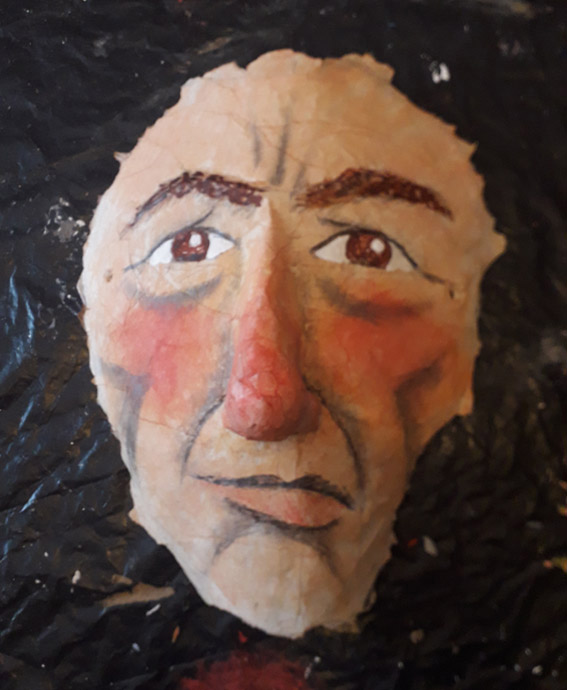
THESE, I thought moodily as I left the Vaudeville last week, are indeed the times that try men’s souls. Actually, as I’m sure you know, the thought occurred first, in a conceivably more critical context, to the estimable Thomas Paine (1737-1809), allegedly the subject of the new work TOM PAINE, by one Paul Foster, in which the company of New York’s Cafe La Mama are presently disporting themselves.
Mr. Foster interests me. He contributes a programme note in which he claims that, up to a year ago, he did not know who Paine was; and he goes on to imply that his lack of knowledge was the result of some conspiracy on the part of the American establishment of educationists, who were afraid to have Paine’s revolutionary ideas discussed out loud. “Why,” asks the remarkable Foster, “is he hidden away and out of sight? Why are we ashamed of him?”
I must assume that Foster genuinely believes that his own ignorance is typical of his countrymen (though he appears to have had no difficulty in laying hands on no fewer than 21 books on Paine), and he will doubtless be relieved to learn it’s not. Obviously The Age of Reason and the Rights of Man are not studied in the kindergartens, but if Foster got through high school without knowing the titles of those works and who wrote them, and without being able to quote at least the more famous of Paine’s utterances, he must have been dismally unique. My joy (as on the repentance of a sinner) that he has, these past twelve months, made lavish amends for his inattentiveness as a scholar is tempered, I’m bound to say, by a certain dismay at the manner in which his enlightenment is celebrated by La Mama.
Surprisingly, in view of the apparent motivations of the author, the piece is in no sense a dramatisation of Paine’s career. Tom is represented on the stage (inordinately unappetisingly, as it happens), but Foster merely uses the man’s words and ideas as a springboard into dark pools of surrealist fantasy. This is meat and drink to the nerveless, uninhibited, black-clad hirelings of La Mama, who seem to enjoy nothing so much as turning themselves into a writhing rabble. The un-elevating text, with its infantile humours and naive prejudices, is matched by techniques of performance and improvisation that might be charitably described as inept. It is almost incidental, but infinitely deplorable, that the exercise succeeds in reducing the story of a man of noble spirit, immense compassion and visionary wisdom to terms of crude burlesque.
Reprinted from What’s On In London, 27/10/67.