By R.W. Morrell

RECENTLY a member of the TPS resident in Sussex purchased an interesting manuscript from a Brighton bookseller. The MSS was in the hand of Mrs. Fitzherbert and is a copy of OBSERVATIONS ON THE PREVAILING ABUSES in the British Army arising from the Corruption of Civil Government. With a proposal to the Officers towards obtaining an addition to their pay. By An Officer. (Thomas Erskine, 1st. Baron Erskine,1750-1823).
The book has the heraldic bookplate of Thomas Clio Rickman and is bound ih 18th.century elaborately tooled red morocco, it measures 9 by 74 inches. Inserted is a letter dated 19th. November, 1842 from S.W.Burgess presenting the Mss to Mr. Justice Erskine (1788-1864), the fourth son of Lord Erskine, which states among other things that the MSS had been purchased “at the sale of “Clio” Rickmans (sic) Effects in 1840.”
The text has been collated with the British Museum copy of the book (8287 de 88(2)) and shows a number of variants apart from a few scribal errors. An inscription on the fly-leaf in Rickman’s hand states that the MSS was “copied from the original by Maria in the year 1783”.
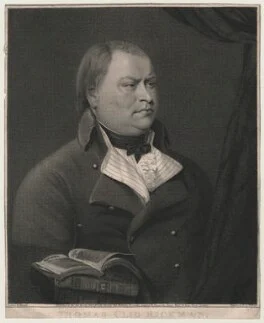
Thomas “Clio” Rickman (1761-1834) was a prominent radical reformer, bookseller and propagandist. He was a close friend of Thomas Paine who subscribed to his book of poems and wrote the first friendly life of him. Hickman was associated with Whig circles, which included Erskine. Erskine made a name for himself as a defender of Paine and other reformers, but later sold out. As a favourite of the Prince of Wales was appointed attorney-general to him. Mrs. Fitzherbert entered London society in 1783, her full name being Mary Anne Fitzherbert (1756-1837), and became associated with the Whigs. She was always referred to as “Maria”. Two years later she married “Prinny”.
The Revolution in France brought a reaction against reform and Rickman was threatened with prosecution for selling Paine’s works. He went into hiding aided by Mrs. Fitzherbert.
The “Maria” referred to familiarly by Rickman on the Mss was manifestly Mrs.Fitzherbert, as a comparison of the handwriting of the manuscript against that of her extant letters demonstrates. Mrs.Fitzherbert had her work elegantly bound and presented it to Rickman.
Erskine, who wrote the work copied out by “Maria” , had a colourful career. After much travel he bought a commission in the 2nd Battalion of the 1st. Royal Regiment of Foot and wrote his book as a farewell gesture on leaving the army in 1775 (he joined in 1767). Though published anonymously the work was early recognised as his and seems to have been suppressed as it is very rare. The inserted letter mentioned above states that no copy had ever been offered at auction.