
by Joseph Lewis
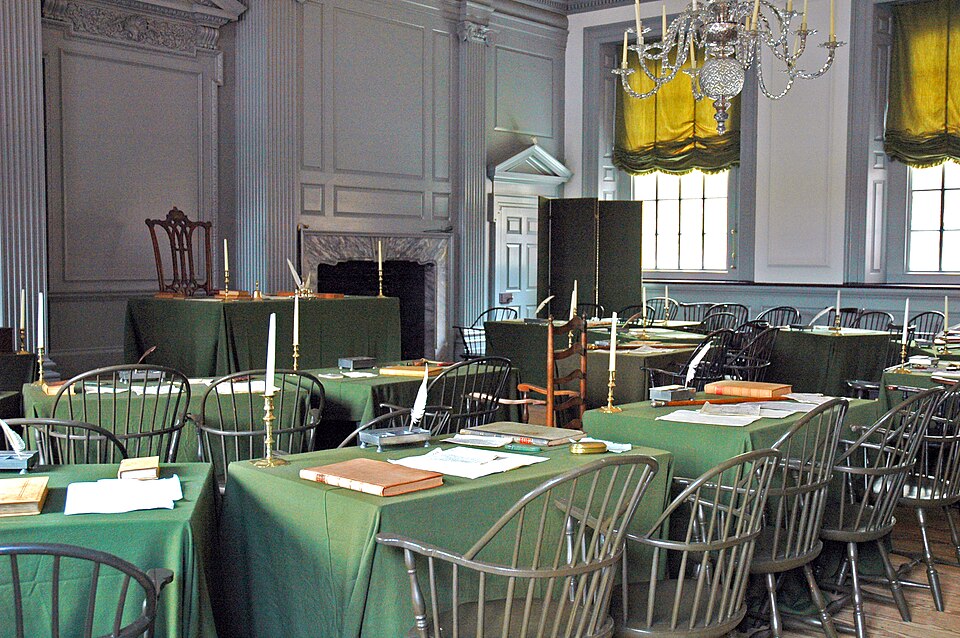

IT IS EXTREMELY difficult for those living today to realize the critical situation which existed in what were then the American colonies of Great Britain before July 4th, 1776. The Colonies were in a ferment regarding the injustices they were suffering under British rule, but it was not until the publication of Thomas Paine’s pamphlet, Common Sense, that the people were aroused enough to demand independence.
The majority of people, among them Washington, Franklin, Jefferson and Adams, were ready to suffer the ills of the situation, rather than fly into conflict with the most powerful nation on earth, such a course of action seemed certain to lead to defeat and disaster.
It was left to one man, who conceived this country as an independent nation, to carry this fight to its ultimate conclusion. It is now generally agreed by reputable historians that it was Paine’s Common Sense which lighted the torch of the American Revolution.
When the pamphlet was first published, its sale was amazing · perhaps one of the greatest publishing events in history. Thousands upon thousands of copies were sold as they came off the press. How many copies were bought by the people may never actually be known. Certain it is that everybody at that time who could read possessed a copy of the book. It caused the members of the Continental Congress to pass a resolution, declaring that “these Colonies are, and of right, ought to be, free and independent…
Paine’s admonition in Common Sense is worth quoting here. He wrote: “To conclude, however strange it may appear to some, or however unwilling they may be to think so, matters not, but many strong and striking reasons may be given to show that nothing can settle our affairs so expeditiously as an open and determined DECLARATION OF INDEPENDENCE.” Paine also proposed “that a day be solemnly set apart to proclaim the Charter.” It was done as he suggested. That day was July 4, 1776. The greatest day in the history of man’s struggle for freedom.
And so the members of the Continental Congress voted on the resolution to draft the Declaration as Paine suggested.
The committee appointed to prepare the document was composed of five men, Benjamin Franklin, Roger Sherman, Robert Livingstone, John Adams and Richard Henry Lee, who had introduced the resolution in the Continental Congress. But because of the illness in Lee’s family, which necessitated his return home, Thomas Jefferson was appointed in Lee’s place.
When the pamphlet Common Sense was published, it received high praise but by no means unanimous acceptance. Its cry for independence provoked bitter and vigorous opposition. Independence was looked upon with horror, and was bitterly denounced. There appeared numerous pamphlets and resolutions opposing independence and seeking some form of redress and reconciliation with Britain. Had it not been for Thomas Paine and his unquenchable desire for a Free and Independent nation, it is quite likely that the United States of America would never have come into existence.
In order to answer this powerful opposition against independence, Paine resorted to every literary means at his disposal to answer his critics.
In the first of these pamphlets he signed his name as “The Forester.” When the situation became more intense and the opposition threatened to split the country in half, Paine published the now famous pamphlet entitled, A Dialogue Between the Ghost of General Montgomery, Just Arrived from Elysian Fields, and an American Delegate, in the Wood near Philadelphia. This work appeared in late May or early June 1776, I was so certain that Thomas Paine was the principle character in this mighty struggle and because of my deep familiarity with his philosophy of government and style of writing that I was convinced without a shadow of doubt that Thomas Paine had written the Declaration of Independence, which he had first proposed for the Colonies in his pamphlet Common Sense, that I wrote a book, Thomas Paine, The Author of The Declaration of Independence, to demonstrate it.
In this book I gathered and detailed overwhelming evidence to prove that the author of Common Sense was also the author of America’s Charter of Freedom.
It was my contention that Paine had prepared the manifesto for the committee appointed to “draw it up”. Thomas Jefferson was selected by the committee to “prepare” it for an impatient Congress. That Jefferson “mangled” the document, as characterised by R.H. Lee, there is no denying. When I had finished my book, I thought the evidence was so conclusive that I did not think I should discover additional facts to further lend support to my thesis. However, I did. I am happy to have found this additional evidence, which so conclusively and irrefutably proves Paine’s direct connection with the Declaration of Independence, that I am constrained to make it the subject of this special article.
In The Dialogue, Paine argues, with equal emphasis, as he did in Common Sense, using the dialogue form to answer all questions of those still in doubt as to our separation from the “Mother Country”, and the establishment of a new nation. In order to understand the full significance and importance of this pamphlet, it should be read not only in its entirety, but in connection with and in association with the Declaration of Independence. It must be remembered that Paine resorted many times to this method of the dialogue narrative in expressing himself.
In the pamphlet, to express his thoughts, Paine uses the ghost of Gen. Montgomery, who died in battle, and a Delegate to the Convention, as characters in these dialogues.
The Delegate, who represents those still in doubt as to what course the Colonies should take, says to Montgomery:
‘”But suppose the terms you speak of should be just and honourable?”
And Paine answers through Montgomery.
“How can you expect these, after the King has proclaimed you rebels……I see no offers from Great Britain but PARDON. The very word is an insult upon our cause….And from whom do these offers come? From a Royal Criminal?”
Then, again, Paine makes the Delegate speak, expressing the sentiments of many sincere and loyal subjects, as Paine wanted no question, no matter how untenable and insignificant it seemed, unanswered.
Del. “Will our distance and Charter protect us from the influence of the Crown?”
Gen. Montgomery. “Your distance will only render your dangers more immanent and your ruin more irretrievable.”
Del. “Will not a declaration of independence lessen the number of friends and increase the rage of our enemies?”
Gen. “Your friends, (as you will call them), are too few, too divided, and too interested to help you.
After asking every possible question and stating every possible object- ion to Independence, Paine answers each and every one with devastating logic, and he concludes with his final peremptory remark, when General Montgomery says:
“But I forbear to argue any further with you. The decree is finally gone forth; Britain and America are now distinct empires…
The decree, of course, was the Declaration of Independence. How did Paine know that “the decree is finally gone forth,” unless he, himself, had written it?
This pamphlet seems to have aroused a more determined opposition, and the Tories threatened a proclamation expressing their loyalty and devotion to the Crown, in a declaration of DEPENDENCE!
This Declaration of the dissenters of New York did appear shortly thereafter, and it was signed by nearly 500 of the most prominent citizens of that time, which caused the State of New York to hesitate in falling in line in adopting the Resolution of Independence passed by the Continental Congress.
Philadelphia, the cradle of Liberty, also teemed with vast elements of opposition. The Tories vastly outnumbered the Patriots, and the Quakers put up the breastwork of religion to avoid supporting the fight for Independence, until castigated by Paine, in his Epistle to the Quakers.
Paine took cognizance of the growing and menacing opposition of a large segment of the population, and sensing the importance of taking advantage of every opportunity to inform the people, wrote a letter in which he used the name “Republicua”, just as he used assumed names to answer the critics of Common Sense. It should always be born in mind that Common Sense was written anonymously.
This letter was written to supplement Paine’s Dialogue, in which he advanced cogent and persuasive arguments pleading for Independence, and to silence the mounting and dangerous opposition of our intention to govern ourselves.
It was a last minute and final appeal in favour of Independence and Paine did not mince words in denouncing the opposition. The letter appeared in the June 29, 1776 issue of the Pennsylvania Evening Post and until now has never been attributed to Paine. To me the letter is typical of Paine’s writing and I have no hesitation in ascribing its authorship to him. I quote the letter in full:
Every moment that I reflect on our affairs, the more am I convinced of the necessity of a formal Declaration of Independence. Reconciliation is thought of now by none but knaves, fools, and madmen; and as we cannot offer terms of peace to Great Britain, until, as other nations have done before us, we agree to call ourselves by some name. I shall rejoice to hear the title of the UNITED STATES OF AMERICA, in order that we may be on a proper footing to negotiate a peace.
Besides, the condition of those brave fellows who have fallen into the enemies hands as prisoners, and the risk which every man runs, who bears arms either by land or sea in the American cause, makes a declaration of independence absolutely necessary, because no proper cartel for an exchange of prisoners can take place while we remain dependants. It is some degree of comfort to a man, taken prisoner that he belongs to some national power, is the subject of some state that will see after him. Oliver Cromwell would have sent a memorial as powerful as thunder to any king on earth, who dared to use prisoners in the manner which ours have been. What is it that we have done in this matter? Nothing. We were subjects of Great Britain, and must not do these things. Shame on your cowardly souls that do them not! You are not fit to govern.
Were Britain to make a conquest of America, I would, for my own part, choose rather to be conquered as an independent state than as an acknowledged rebel. Some foreign powers might interpose for us in the first case, but they cannot in the latter, because the law of all nations is against us. Besides, the foreign European powers will not be long neutral, and unless we declare an independence, and send embassies to seek their friendship, Britain will be Beforehand with us; for the moment that she finds that she cannot make a conquest of America by her own strength, she will endeavour to make an European affair of it. Upon the whole we may be benifited by Independence, but we cannot be hurt by it, and every man that is against it is a traitor.
REPUBLICUS.
I urge you to re-read this letter with scrupulous care and I am confident that you will see, as clearly as I do, not only the unmistakable character of Thomas Paine, but also his inimitable style of writing and his mode of expression.
This letter was Paine’s last warning. Let me quote a pertinent paragraph: “Some foreign-power might interpose for us in the first case, but they cannot in the latter, because the law of nations is against us.” Now, what is the meaning of this statement?
The French fleet was standing by to intercede on our behalf as soon as we declared ourselves a nation. To come to the aid of a nation is a different matter from helping a rebellion. One, diplomatically, is permissible; the other, is an act that could provoke war. As Paine so dramatically states, that “the law of nations is against us”. Without a Declaration of Independence, France’s gesture of help would of necessity have brought on a conflict with-England and neither nation was looking for war with each other.
The French government of the time was anxious, short of war, to vent her animosity upon England, and was willing to aid the Colonies. Paine warned about expecting help without being a nation and stressed the absolute necessity of a formal Declaration of Independence. “Time was of the essence”, and there was not enough of it for another pamphlet, hence the “Republicus” letter. You must become cognizant of these facts, aware of the existing situation, to fully appreciate the situation and understand the reason for Paine’s statement. Only in this light can you obtain a proper understanding of the situation existing almost two centuries ago. Is it any wonder that Paine denounced the opponents of Independence as “knaves and fools”?
When you consider all the circumstances, you can then understand why the Continental Congress appointed Paine Secretary of Foreign Affairs.
Is it not strange that if Thomas Jefferson wrote the Declaration of Independence, that he was not appointed Secretary of Foreign Affairs?
We can now fully appreciate why Colonel Laurens, when appointed to go to France to negotiate a loan vitally necessary for Washington’s army, refused to go unless accompanied by Paine, and prompted Laurens to comment that “Paine knows more about diplomacy than I do”.
In this letter we read, as in the original draft of the Declaration of Independence, the name “The United States of America”. To Paine, also, belongs the credit and honour of having given our nation its name.
If anyone other than Paine had written the letter signed “Republicus”, it is highly unlikely that he would have remained quiet during and after the revolution. Don’t you suppose he would have proudly identified himself as the author of the letter, and claim credit for naming the new Republic, as Paine did in the second number of The Crisis, when he said that the “United States of America” will sound as pompously in the world or in history as the kingdom of Great Britain”?
The historical importance of this letter by Republicus cannot be overstated.
What has contributed so much to the failure to recognise this letter as being from the pen of Thomas Paine is the fact that he has been denied his proper place in American history. Every conceivable slander, lie, and false accusation to discredit this great patriot has been heaped upon him. History books have studiously omitted his name and politicians have avoided association with him. Even presidents, who quote his immortal words, do not credit him with the quotations they use.
Nearly all the social legislation and welfare laws of our generation can be traced directly to him. He is the fountainhead of modern social and political philosophy. Why, then, has he been so sadly neglected? He wrote his great book, The Age of Reason, and religious fanatics have never ceased to pour hatred and vituperation upon his innocent head, and yet nearly every modern and enlightened theologian has accepted his basic premises.
And equally as important as the previous facts just recorded, is a letter which I recently discovered, and which, in my considered opinion, binds and seals the connecting link of Paine’s authorship of the Declaration of Independence. Paine wrote to the Senate of the United States, asking compensation for the expenses he incurred in his trip to Europe with Colonel Laurens, to secure a loan for Washington’s struggling army.
The war is over and the United States of America is now firmly established. Paine feels shamefully neglected, and, while pleading for a just reimbursement, he makes this significant statement in a letter which was written in January 1809 and addressed to the Honourable Senate of the United States, a few months before his death. In this letter he writes: “As to my political works, beginning with the pamphlet Common Sense, published the beginning of January 1776, which awakened America to a declaration of independence as the president and vice-president both know as they were works (emphasis mine) done from principle, I cannot dishonor that principle by asking any reward for them…”
Is there any question, in the face of these indisputable facts, that Thomas Paine and Thomas Paine only, wrote the Declaration of Independence, the greatest political document proclaiming the Rights of Man in the history of the human race?
You might ask, “Why did not Paine sign the Declaration of Independence?” The answer is simple. He was not a member of the Continental Congress, nor an official of the government.
Perhaps it was that Jefferson so mangled the document that Paine did not press his claim with more vigour, or was it because he did not wish to embarrass the third President of the United States, a close friend to whom Paine owed more than one debt of gratitude.?
Is it any wonder that John Adams, who was upon the scene and knew the : facts, had to admit that “History will ascribe the American Revolution to Thomas Paine” and that “Without the pen of Paine, the sword of Washington would have been wielded in vain”?
No matter how you use it, no matter how you spell it, no matter how you pronounce it, Thomas Paine and the Declaration of Independence are synonymous terms.
I am indebted to Professor Robert Ginsburg, Dept. of Philosophy, Pennsylvania State College, for calling my attention to the letter. The letter is printed in J.H.Hazelton’s book, The Declaration of Independence – Its History, without any attribution or note of the date it appeared in The Pennsylvania Evening Post.
GEORGE WASHINGTON
Mr. Lewis characterises this letter as “abusive” and untrue. George Washington (he points out) wrote this to Thomas Paine:
Your presence may remind Congress of your past services to the country; and if it is in my power to impress them, command my best services with freedom, as they will be rendered cheerfully by one who entertains a lively sense of the importance of your works, and who with much pleasure, bribes himself, your sincere friend…
Mr. Lewis reminds Professor Catlin that Washington was President of the United States and one of the Founding Fathers. “Did a President of the United States ever write you a letter like that?”, Mr. Lewis asks the Professor.
THOMAS JEFFERSON
Thomas Jefferson, another President of the United States and one of the Founding Fathers, wrote this to Thomas Paine:
“…I am in the hopes you will find us returned generally to sentiments worthy of former times. In these it will be your glory to have steadily labored, and with as much effect as any man living. That you may live long to continue your useful labors, and to reap their reward in the thankfulness of nations is my sincere prayer…”
“Did a President of the United States ever write you a letter like that?”, Mr.Lewis asks the Professor.
JAMES MONROE
James Monroe, again a President of the United States and a Founding Father, wrote this of Thomas Paine:
The citizens of the United States cannot look back upon the.’ time of their own revolution without recollecting among the names of their most distinguished patriots that of Thomas Paine. Is it necessary for me to tell you how much all your countrymen, I speak of the great mass of people, are interested in your welfare? They have not forgotten the history of their revolution and the difficult scenes through which they passed… You are considered by them as not only having rendered important services in our own Revolution, but as being, on a more extensive scale, a friend of human rights, and a distinguished and able advocate in favor of public liberty. To the welfare of Thomas Paine, the Americans are not, nor can they be, indifferent…”
Again, Mr. Lewis asks the Professor: “Did a President of the United States ever write you a letter like that?”.
Next, Mr. Lewis cites the resolution of the Congress of the United States:
“Resolved: That the early, unsolicited and continued labors of Mr. Thomas Paine, in explaining and enforcing the principles of the late Revolution, by ingenious and timely publications upon the nature of liberty and civil government, have been well received by the citizens of these states, and merit the approbation of Congress…”
“Did a governmental body ever pass a resolution like that on your behalf?”, Mr. Lewis asks.
“It is quite obvious”, he goes on, “that you are not wholly acquainted with the history of the American Revolution”.
He then turns to Professor Catlin’s descriptions of Thomas Paine as the dictionary “deplorable scoundrel” and a “foul-mouthed rogue” definitions are: Scoundrel: “A man without principle, a mean thorough- going rascal, worthless knave…”; and Rogue: “A thoroughly dishonest and unprincipled person; a knave; a trickster…”. Thomas Paine is no longer able to defend himself or to bring action for libel, but, says Mr.Lewis:
“I am alive and am assuming the role of Thomas Paine’s defender and I am-going to make you put up or shut up”
“What act or deed did Thomas Paine commit that caused you to call him a deplorable scoundrel and a foul-mouthed rogue?”
THE CHALLENGE
Then comes Mr. Lewis’s challenge:
I now publicly offer you the sum of One Thousand Dollars for one iota of evidence that Thomas Paine was guilty of taking a dishonest dollar. I demand proof of this charge.
I now publically offer you an additional One Thousand Dollars for an iota of evidence that Thomas Paine ever wrote one line advocating dishonesty or urging anyone to commit a dishonest act. I demand proof of your charges and if you fail to comply with this demand, you shall go down in history as a companion of the detestable James Cheetham, the convicted libeller of Thomas Paine.
On the back of the Thomas Paine Foundation letterhead there are some quotations from Paine’s writings, says Mr. Lewis. “Was it any of these sentiments that caused you to call Thomas Paine a deplorable scoundrel and a foul-mouthed rogue? It was Paine himself, who said: ‘How easy it is to find abusive words’.”
“Unless you make a retraction of your utterly outrageous attack upon Thomas Paine, ‘one of the best and most useful men who ever lived’ I shall”, Mr. Lewis tells Professor Catlin, “when I return to London, consult a firm of solicitors for advice as to whether the statement in your letter…”I hope the citizens of Thetford will have the moral courage to blow it up’, is subject to legal prosecution for advocating violence and the destruction of public property”. The words and mode of expression of your letter are not those of a “man who professes to be a member of one of the learned professions”.
And Mr. Lewis concludes: “Had enough?”
Apparently Professor Catlin had, for apart from suggesting Fleet Street for the statue he refused to take up the challenge.
“…. my maternal great-grandfather, Captain Hill, a British soldier of yeoman stock, spluttering patriotism and piety with hallowed fierceness, was fighting radicalism and rebellion in London. The one heirloom my mother bequeathed me-his sword, and many a day when I played about her knees she told me with pride how her grandfather had been sent with a troop to arrest a notable villain and traitor Tom Paine, and how he angrily drove the sword into Paine’s bed when he found that the ruffian had fled. Paine, secretly warned, did in fact fly from London to France in 1791.” (Joseph McCabe Eighty Years a Rebel. Girard, 1947. p.6.)
(Editorial Note). This claim that Paine fled to France to avoid arrest has been questioned. Paine left England to take up his seat in the French Convention and despite the warning received from the artist William Blake about the proposal to arrest and charge him seems to have departed from the country in the normal manner without any undue haste. It seems possible that the departure and the planned arrest coincided by accident thus giving birth to the notion that Paine fled the country.