
by Robert W. Morrell
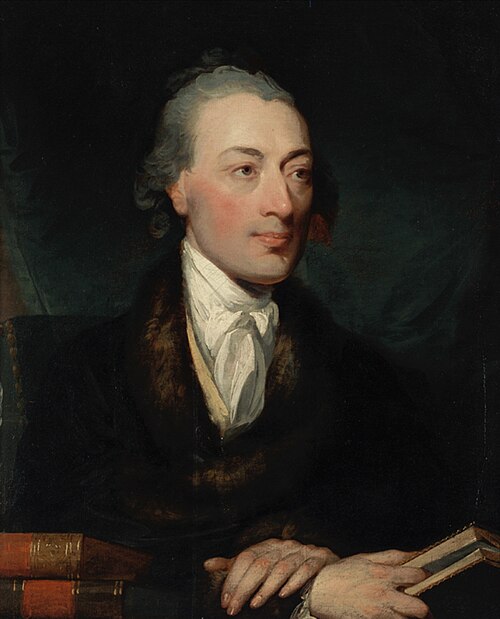

FAMOUS FOR THE GREATER part of his life and for some years after, C.F. Volney is now an almost forgotten figure. There was a time when his book, “The Ruins”, or “A Survey of the Revolutions of Empires”, usually referred to as The Ruins, appeared in edition after edition in many countries and places within them. Its influence in radical circles is seen in the fear it gave rise to in the ruling establishments, even the mere display of a print of Volney could mean financial ruin for small businessmen, as Hetherington pointed out was the case in Ireland in the 1830’s. (Poor Man’s Guardian. May 4th., 1833. No.100.) Volney personally experienced the wrath of some individuals, and he tells us that in Corsica he was looked upon as a heretic for writing The Ruins, and, as though this was not enough, suspected of being a French spy! (Moniteur. Paris, March 20th. & 21st., 1793.)
Volney was the author of a great many works but it is beyond question that his most influential was “The Ruins”. It first appeared in France in 1791 (the year that saw Part 1 of Paine’s Rights of Man appear), and soon ran through several editions. It became a must for the libraries of progressive minded 19th.century artisans. At the same time it aroused the fury of the supporters of the conservative establishments, and, in view of its anti- religious bias, among the religious. Although the fury has now diminished it still finds the odd echo or two, particularly among the less perceptive American academics. Thus L.G.Crocker displays a certain irritation and writes of it as “a shallow piece of rhetoric.” (Encyclopedia of Philosophy. Vol. 8. 1967.) An earlier and much better scholar, the Scot, J.M. Robertson, is much more to the point when calling attention to its original contributions to the study of Christian origins. He accurately describes it as “a brilliant work….” (Christianity and Mythology. London, 1910. pp.5.)
Volney was born at Craon in Anjou, on February 3rd., 1757, and named Constantin-Francois Chasseboeuf, this last name being soon changed by his father to Boisgirais. This was changed to Volney in 1783 just prior to his departure to the Middle East. Volney had an unhappy childhood, however, this does not appear to have prevented him developing a strong academic bias. When he was 15 he went to Paris to complete his higher education, studying history, ancient languages, medicine, sociology and physiology. In 1781 he published his first book, Chronology of Herodotus, and this brought him into contact with the materialist d’Holbach, who in turn introduced him to the gifted American Benjamin Franklin and Madam Helvetius. Such introductions paved his way into French intellectual circles which might otherwise have remained closed to him.
The receipt of a small legacy in 1782, prompted Volney to take the decision to go abroad to undertake an historical and sociological survey in Egypt and Syria. It was characteristic of Volney that having decided to go he then took an entire year to prepare himself he even went so far as to walk from Paris to his port of embarkation. On arrival in Egypt he found that that nation was not quite to his liking and after seven months cut short his stay and went off to Syria, where again his practical streak asserted itself and he went to live “among the Druzes, in an Arabian convent, which rendered Arabic familiar to me”. (A sect of Christians now mainly found in the Lebanon) (Travels through Syria and Egypt in the years 1783, 1784, and 1785. Dublin, 1788.pp. .vii. Most writers on Volney, including not a few who contribute to leading reference works, wrongly state that he learned Arabic in Egypt.)
Volney found nothing spectacular during his travels in Egypt and Syria and after three years there he returned to France, where in 1787 he published a two volume work on his trip. (Voyage en Syrie et Egypte, pendant les annees 1783, 1784 et 1785. Paris, Desenne, 1787.) The book was very well received and the tsarina of Russia went as far as to award Volney a gold medal; not to be outdone the French king appointed him Director General of Commerce and Agriculture in Corsica. Volney put into his new position the same practical qualities he had displayed during his trip to the Middle East.
In 1790 Volney plunged into the politica; arena, although not without having first resigned from his official post on the grounds that a “National Deputy ought not to be in any way a pensioner”. (Edmund Burke could have learned a lesson from this but lacking Volney’s principles he kept his government pension a secret while an M. P.) (A Brief Sketch of the Life of C.F.Volney. London, James Watson, Nd. pp.4. This work was published in the early 1840’s and its author anonymous, it was possibly by Watson himself. Hereafter BSLV.) Politically Volney was a liberal republican radical who stood for major social change in French life. He disliked all forms of secrecy, and detested the Catholic Church for the political power it had. He was the first to propose a National Guard and the division of France into communes and departments. He attacked the right of the king to make war and proposed in the Assembly a motion, which was accepted, that France would make no further wars for territorial gain. As events were to show such motions constituted a rather futile gesture. Volney was elected Secretary of the Constitutional Assembly on November 23rd., 1790. The year which saw so much political effort also saw the publication of his Chronology of the Twelve Centuries anterior to the passage of Xerxes into Greece.
In 1792 Volney returned to Corsica and there purchased an estate near Ajaccio, where he resumed his agricultural work, This continued until he was forced to leave the island following the revolt of Pascal Paoli. Paoli, who claimed to be Volney’s friend, put the estate up for sale. It was during this period in Corsica that Volney became very friendly with a young army officer named Napoleon Bonaparte.
Volney, as mentioned, was a republican, but this did not save him from the wrath of Robespierre, he was imprisoned as, of all things, a royalist! It was not until the fall of Robespierre that he was released. Shortly after he was appointed professor at the Normal School, which was loosely a type of teachers training college. Of his work here George Underwood has commented that he appears to have “anticipated some of the methods of modern historians.” (Ruins of Empire. London, 1921. Introduction pp.viii.) The fall of Robespierre appears to have improved the political situation very little and Volney, having suffered one spell in prison, decided that the omens were bad and it would be best to leave France, thus on October 11th.,1795, we find him arriving in the infant United States.
Volney’s visit to the United States was to result in the second book on which his reputation as a scientist rests. This work, which we shall look at in more detail shortly, was the first part of a projected two volume study. The first dealt with the physical characteristics of the nation, the second, the part that never appeared, was to cover its political institutions. Volney had intended to settle in the United States, but as the poet Burns so aptly points out, the best laid plans of mice and men sometimes come unstuck. Although given a friendly reception on his arrival the political situation changed, particularly with the election of the Tory Adams as President, and there was an increasing hostility displayed towards France. As well as political attack: Volney found himself the target for a bitter attack on him from the theologian cum chemist, Joseph Priestley. This person, himself a refugee from a hostile political situation in Britain, published a pamphlet with the long winded title Observations on the Progress of Infidelity with Critical Remarks on the Writings of Some Modern Unbelievers, and particularly on the Ruins of M. de Volney (1797). In this he calls Volney “an ignorant man. and scarcely superior to a Chinese or a Hottentot”. (BSLV. pp.7.) Volney replied to this ill-mannered outburst in a letter which was published in Philadelphia on March 2nd.,1797, in an English translation, although Count Daru hints that it was in fact written in English. Priestley’s latest biographer diplomati- cally ignores the affair. (“il repondit en Anglais, et les compatriotes de Priestley ne purent reconnaitre un Francais, dans cette reponse, qu’ a sa finesse et a son urbante,” (Notice sur M. le comte de Volney. pp.xvi. See BSLV .pp.7).)
Following his return to France Volney resumed his political activities, however, having no love for dictators he soon fell out with Napoleon, taking a dim view of his adoption of the royal title. He acidly commented that “it would be better to recall the Bourbons! and went on to resign his seat in the Senate, although he was later to resume it after the restoration and accept, under strong protest, the title of Count. (F.W.Gibbs.Joseph Priestley, Adventurer in Science and Champion of Truth. London, 1965. The last part of the title has a somewhat hollow ring in light of the incident referred to.) (BSLV .pp.9.) His attitude towards the title is shown in a letter he sent to a friend: “you may observe, by my seal, that I have armorial bearings, viz., two ruined Asiatic columns, the true supporters of my nobility, surmounted by a swallow, that faithful, though migratory bird, who every age sings to me of spring and liberty. (BSLV.pp.9.)
In 1810, Volney married his cousin, Mlle de Chasseboeuf, having in a sense been engaged to her since his youth but due to his travels she had married another, this person having died she was free to marry Volney. He lived a further ten years, active years too, and died, partly from the effect of something he had picked up in the Middle East, on April 25th.,1820, aged 63. He was buried after a religious ceremony in the Pere Lachaise. Despite the religious ceremony Volney was in life an atheist. In The Ruins he attacks priestcraft and theology as enemies of mankind, an attitude of mind also found in his little known History of Samuel (1819) – a work often attributed to Voltaire. Abbe Migne stated that “It appears that in his last moments he refused the consolations of religion.” (Dictionnaire de Biographie Chretienne et Anti-Chretienne.) English evangelicals who roundly detested his influence spread pious lies about his “recantation”, although what they gained from such childish tactics is impossible to fathom. (G.W.Foote and A.D. McLaren examine in detail this “edyfying fiction” in their book Infidel Death-Beds.)
Voyage en Syrie et en Egypte was Volney’s first scientific work, and is the first serious study of the area in modern times. It is not a travel book in the popular sense of being a connected string of adventures, incidents and comment; if this is expected then the reader will be disappointed. It is, as noted, a scientific work which goes into great detail on various aspects of the history, social conditions and physical description of two important nations in the Middle East, three if we include, as Volney did, Palestine as part of Syria. The author’s close interest in earth science is brought out clearly, although just where Volney came across his up to date knowledge of geological ideas is anything but clear. He has some pertinent points to make about the action of the Nile in respect to the deposition of material in the Delta region. He discusses the action of wind and rain, and does not forget the sea in his deliberations. He has some interesting observations on the forces causing land to rise in the Delta, and speculates on whether the high land there is so by virtue of the river cutting downwards.
In Syria (which also at that time included Palestine), Volney found ample scope for geological observation and speculation. He points out that if a map of the region is examined it will be seen “that this country is in some way only a chain of mountains”. (Travels Through Syria & Egypt…Dublin, 1788. pp. 179. (And all quotes after) 20. pp. 186. 21.pp.187. 22. pp. 188. 23. pp. 189.) Volney brought his highly practical mind to bear upon the nature and origin of the mountains. An examination of their make-up showed them to consist of “a hard calcareous stone of whitish colour, sonorous like free-stone, and dispersed in strata variously inclined”20 The inclined strata he explained was the result of the action of earthquakes and volcanoes – a popular explanation invoked frequently by geologists of the time. Volney draws attention to the fossils contained in rocks in Syria, and in particular in those situated in the area bordering the Dead Sea, these he says are “small volutes and bivalves.
The Valley of the Jordan greatly interested Volney and he sought to explain its formation, calling in again earthquakes and volcanic action. He argues that it might be attributable to a “violent sinking of a country which Volney was happy to formerly poured the Jordan into the Mediterranean. invoke earthquakes but he also wanted to know their origin; His speculations in this respect are rather amusing, He considered that the “action of water on dried earth” played a major role for earthquakes that seldom happened in Syria.
Volney’s book on Egypt “but in winter….after the autumnal rains… and Syria is not too weighted in favour of geology, but scattered about its considerable length are many geological observations and theories which make the book important in the history of geology, at the same time of course we must remember that geology was at the time a new science and so while many theories employed by Volney now amuse rather than explain, they were during the period in which he wrote often in advance of much that was written.
Volney’s book on America, View of the Climate and Soil of the USA, like that on Egypt and Syria, has largely been forgotten by students of the history of geology. (Tableau du climat et du sol des Etats Unis d’Amerique…. 2 vols. Paris, 1803. English edition published in London the following year; an American edition, translated by C.B. Brown, also appeared in 1804. The modern Hafner edition (New York, 1964), which reprints the American 1804 translation, has the plates from the English edition.) Compared with the earlier work the book on America is much more geologically oriented. As a work on physiography and geology it was by far the best, of the United States it is, as Merrill has written, that had thus far appeared with the possible exception of those of Schopf”, Volney gives no clue that he knew of Schopf’s work, which is rather strange as he was well up on the available geological works. (G.P. Merrill. The First One Hundred Years of American Geology. N.Y. 1964 pp.25.) (Beitrage zur Mineralogischen Kenntniss des Oestlichen Theils von Nord Amerika und seiner Geburge. 1787. J.D.Schopf (1752-1800), was a professional scientist who served with the British Hessian troops during the American War of Independence. His work was published in German and I have not seen an English translation.)
Schopf had toured an area which in part had also been covered by Volney, and had advanced some ideas to explain the origin of the flat coastal region extending from the western end of Long Island to Florida. Fossils found there suggested to him that an explanation was to be found in it having been sea beaches of recent date, more or less. Schopf also saw in the northeast by southwest trend of the east coast an illustration of the action of the sea in determining appearance of land structures, the sea action in this case being the Gulf Stream. He was puzzled by the discovery of sea born sediments on mountain heights but their non-appearance at lower levels.
In the 1790’s the population of what then constituted the United States was about three million, the bulk of which was located in the towns along the Atlantic seaboard. The interior was inhabited by Indian tribes, often hostile to white people. Despite the dangers it involved, Volney set off to explore the interior often on foot. (View of the Climate and Soil……London, 1804. pp.42.) His approach had a very modern ring to it, for field work is an essential part of modern geology. Geology was then, as noted earlier, in its infancy as a branch of science; as a specific subject it was still bound up with geography. If Woodward be correct, the very word geology had only been introduced in 1778 by J.A. de Luc. (H.B. Woodward. The History of the Geological Society of London, London, 1908. pp. 1.) Essentially, then, although Volney’s book has been described as geological it is also very much geographical.
During his tour of America Volney assembled a comprehensive geological collection consisting of rocks, minerals and fossils, the latter being referred to also by the earlier term “petrifications”. This was a working collection, assembled to allow Volney to construct an account of the strata in various areas he visited between the Mississippi and the Atlantic. Although by our standards his account is oversimplified, it constituted an important stop towards a better understanding of the stratigraphy of a major region of the United States. Volney took the collection back with him to France and asked Lamarck to examine the fossils. He identified them as a species of mollusc similar to some described by Linneus as Anomia dorsata. He submitted that this indicated that the areas from which the fossils had come had at an earlier period been covered by the sea. This theory was extended by Volney and incorporated in his book. He argues that large areas had been covered by material derived from adjacent mountain ranges. In drawing up his account of the strata Volney pays credit to help gigging by “some mineralogical friends” on his return to Paris, although Merrill argues that this was in Philadelphia. (The First One Hundred Years of American Geology. pp.27.) Interestingly enough, Philadelphia was already the home of a geological collection for some years prior to the arrival of Volney. The famous radical Thomas Paine when editor of the Pennsylvania Magazine refers to the collection, although pointing out that the bulk was of European origin. The American material included consisted in the main, so Paine wrote, of “several specimens of earth, clay, sand, etc., with some account of each, and where brought from. (Pennsylvania Magazine,1772. Reprinted in Miscellaneous Letters and Essays on Various Subjects by Thomas Paine, London, Sherwin,1817.pp.9. Paine was a close friend of Volney.) One wonders whether Volney used this collection or even added to it.
Volney divided the area he covered into three main regions, and went on to subdivide it partially into five smaller zones, characterised by what he thought were their dominant rocks. This by our present knowledge was superficial in the extreme, in fact he managed to ignore evidence he found himself which seemed to run counter to certain of his own conclusions, although he advanced what he thought good reasons for doing so. He accurately ascribed the channels leading to the falls at Niagara as the product of the erosive powers of water. George White has drawn attention to several geological firsts found in Volney’s book on America; in it will be found”the first extensive, organised account of the physical features of the trans-Allegheny region”; the first geological sections used to illustrate an American geological report; the first coloured geological map of the United States. (Introduction to the Hafner edition.pp.viii-ix.) (In the French 1st edition.) White’s claim that he was first to systematically collect geological specimens in America is, in the light of what Paine wrote, debatable.
Armed with our present knowledge Volney’s ideas seem in many instances way out. However, at the same time we should remember that others, often famous in the history of geology, accepted much odder notions, Bean Buckland, justly famous in the annals of British geology, was hamstrung by narrow biblical fundamentalism it would well fit the description by the late Joseph McCabe as being “funnymentalism”. At least Volney escapes this, in fact
Volney never sought to square his geological discoveries in the light of biblical “facts”, thus although catastrophism forms part of his theoretical armoury it is not a bible based theory. Likewise with geological time; Volney accepted that the geological time-span could be of great age. His work is refreshingly free of supernaturalism; not for him was there any need to present advanced ideas as did the Reverend Joseph Townsend, writing some thirt- een years later, in religious terms. (The Character of Moses Established for Veracity as an Historian: Recording
Events from the Creation to the Deluge (3 vols. Bath & London, 1813-15.) Townsend gave, as Woodward notes “the of much of William Smith’s work….for the first time…” (H.B. Woodward. History of Geology. London, 1911. pp.56.) Woodward, a member of the Rationalist Press Association, was too polite to draw attention to Townsend’s failure to grasp the dangerous implications in Smith’s work in so far as religious theories went. Moses was to remain on his throne a few more years. Although Townsend’s narrow outlook now amuses many people we can also find not too many years later a man of Lyell’s distinction: glacial theory of Agassiz and then flying in the face of the evidence and changing his mind by attributing the Scottish tills to deposition from melting ice-bergs rather than to ice-sheet glaciation. There is some justiication in G.L. Davies description of him as “a renegade” in this context. We have passed over another of Volney’s great interests, the study of languages, particularly classical and oriental tongues. (Lyell was a member of an Ethicist church.) His earlier and later works are predominantly linguistic, but even his work on America displays his interest in language and has a lengthy appendix on the vocabulary of the Miami Indian language. (“The Tour of the British Isles made by Louis Agassiz in 1840”. Annals of Science. Vol. 24. 2. 1968. pp.146.)
Volney proposed a universal language, but does not appear to have pressed the subject with much vigour. At the height of the conflict between Britain and France he was elected a member of the Literary Society of Calcutta for his study of oriental languages. In his will he left a sum of money to promote the study of languages.
Volney was a man of many parts, revolutionary, republican, teacher, professor, traveller, student of the origin of religion, philologist, and scientist. He inspired radicals in Europe and America, and his works were printed in cheap editions by the thousand. However, no one has yet written a good life of him either in French or English, or published a full bibliography. This is a pity, perhaps one day it will be remedied.
Acknowledgements
The author wishes to acknowledge with gratitude the help given him by many individuals, particularly: Christopher Brunel, Dr. W.A.S. Sarjeant, Peter Cadogan, Miss Ella Twynam, Mr. & Mrs. L. Ebury and Professor George W. White.