
by Christopher Brunel, Chairman of the Thomas Paine Society
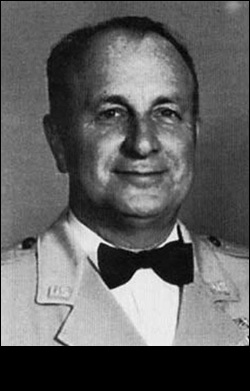
RICHARD GIMBEL WAS A BRAVE MAN. He was a Colonel in the United States Army Air Force, so you would expect that. But he had another kind of bravery, too moral, which he particularly showed in the United States during the “Cold War.” 1959 was the hundred and fiftieth anniversary of Paine’s death, and Richard Gimbel wrote an incisive assessment of Paine, The Resurgence of Thomas Paine The culmination of his examples of the mounting public appreciation of Paine against generations of bigotry was a proclamation of Paine’s plan of disarmament from Part 2 of Rights of Man.
Gimbel pointed out that with other of his works, Rights of Man had just been translated into Russian in the USSR, and he conjectured, “Do you suppose that Khrushchev, before he presented his plan of disarmament to the United Nations last month, had read Paine’s plan? I think there has been a resurgence of Thomas Paine.” “Peace” was still a dirty word in 1959 USA “Paine” was far from being 100% clean either for someone like Gimbel, connected with the rich Gimbel Stores family, this was outspoken bravery. It has something of Paine’s character to it.. Gimbel in the same essay said that Paine “did not hesitate a moment to rush in to promote every good cause and to expose every injustice, and he ended up being generally despised with virtually everyone his enemy for one reason or another.’ “But people with principles are not motivated by the hope of flattery or public acclaim. Unlike Paine; Gimbel was no innovator. He was an historian this century’s most knowledgeable expert on Paine, but Paine’s principles have a habit of rubbing off on those who study him. Look how they converted William Cobbett from slinging the vilest mud at Paine to wanting to erect a grand monument to him.
Now Richard Gimbel, who devoted so many years to researching Paine, has died suddenly in West Germany. My father, Adrian Brunel, first knew him in 1951, during preparations. for Thetford’s Festival of Britain commemorations of Paine, and, though separated by the Atlantic they became firm friends. After my father’s death in 1958, Richard and I became good friends, too, corresponding and sending each other material on Paine.
Often, we posed each other questions that came up in our work. What Swedish editions do you know of Rights of Man, I asked him. He put this query to me: William Hazlitt and several others have claimed that England declared war on France in 1793 because of Paine’s Rights of Man. They thought not only could they crush the spread of his principles but by declaring war they would be able to stop Paine enthusiasts in England, since they would become ‘collaborators with the enemy’. Do you agree with this?”
He was constantly working on different projects. Stationed in the USAAF near Thetford during the last war, Colonel Gimbel raised a subscription amongst American servicemen, which resulted in a plaque on Paine’s house for all who passed to see. In 1953 he led a campaign to get the white marble bust of Paine, which for many years had been hidden away in a Philadelphia basement, put on display once again in the city so full of Paine associations.
In 1956 he claimed to have solved the bibliographical puzzle of the first edition of The Age of Reason with his discovery of a 1793 French publication of the work. Eighteen months ago he approached me about a study he was making” of Paine’s bridge at Monkswearmouth (commonly called the Sunderland Bridge), and eventually I was able to dig out some clues for him. So far I have been unable to find out how near to publication Gimbel was with his findings before he died.
Perhaps his biggest work was, Thomas Paine: A Bibliographical Check List of Common Sense with an account of its Publication (Yale University Press/Oxford University Press, 1956). This excellent publication contains over 150 listed editions of Common Sense, and about half the book is devoted to a copiously illustrated account of the early publications of Common Sense. Gimbel took twenty-nine years to collect material and write this book.
Such a person was a very apt Vice-President for our Society, an active man, not just a figurehead. He was also a person of wide interests. Paine’s influence again? Gimbel was a Yale graduate in the class of 1920, and, until 1936, was associated in executive capacities with Gimbel Department Stores (the chairman, Bernard Gimbel, was his cousin) and with Saks Fifth Avenue. After service with the USAAF, he returned to his alma mater in 1951 to direct the Air Force Reserve Officers’ Training Programme, retiring in July 1953 to become the Curator of the Aeronautics Library at Yale. I shall always remember his Christmas cards to both my father and I, which had some aeronautical motif to them usually something jolly like Father Christmas in a balloon,
In addition to owning the finest collection of Paine books and manuscripts in the world, Gimbel was a member of the Grollier Club and a collector of the works of Edgar Allen Poe and of Charles Dickens’s A Christmas Carol, which is quite a varied mixture. He was an enthusiast in all his interests and studies, but as a serious historian and researcher he never let his enthusiasm cause him to exaggerate in the way that some admirers of Paine have. He did not claim his work on Common Sense was a definitive bibliography, it was a check list, and he constantly sought more information from fellow collectors and librarians as steps towards a bibliography. His approach towards a bibliography of Rights of Man was the same.
The quality of Gimbel’s work is seen in what is published in this number of our Bulletin. I hope that it will encourage others to continue in the same spirit. Richard Gimbel is among the magnificent band of fighters to restore Paine to his proper place in history. The Thomas Paine Society is dedicated to this work. The fact that it is easier than in 1963, when we were founded, is due to such giants as our late Vice-President, Richard Gimbel.
It was also an honour to have him as a personal friend. I shall miss him, his cheerfulness, his kindness and his humanity.