
By Audrey Williamson
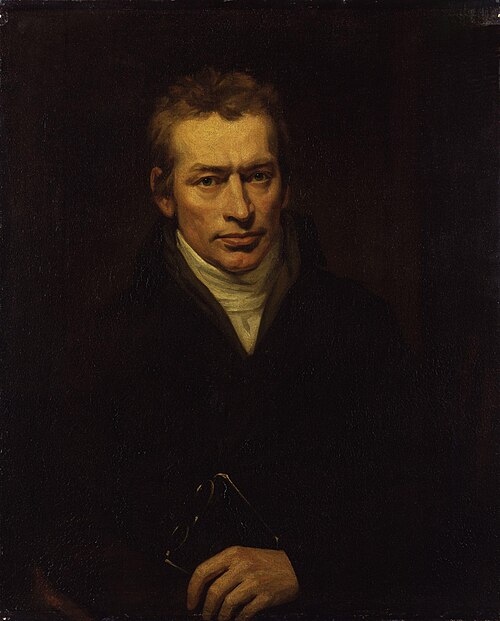
Of all the radical writers who knew Thomas Paine, the one whose work is among the least known or read today, but whose career was the most Varied and Striking, was Thomas Holcroft: Newmarket stableboy, schoolmaster, actor, playwright, novelist. Paris Correspondent for the Morning Herald, acknowledged mentor of William Godwin, victim of the 1794 treason trials and diarist whose entries for the year 1798 provide a fascinating picture of London celebrities, the frequentors of Debrettes, and rumours about Napoleon then freely proliferating about London.
All the admirers of Paine must know that Holcroft, with William Godwin and Thomas Brandl Hollis, helped to see Rights of Man through the press while Paine was in France and greeted the arrival of the book from the printers with the histrionic and indeed, in its way, prophetic ‘Hey for the New Jerusalem! The Millenium! And peace and eternal beatitude be until the soul of Thomas Paine’. It is less well known that Holcroft, even before Lanthenas whose translation of Part 2 of Rights of Man Bonneville published in Paris in 1792, may have provided the link between Paine and Nicolas de Bonneville that ended in Paine’s lodging with the French editor of Bien Informe for five years, from 1795 until his return to America in 1802.
Holcroft was born in December, 1745, the year Culloden, and was thus almost nine years Paine’s junior Baptised at St. Martine-in-the-Field’s, he was the son of a London shoemaker of somewhat feckless application to his trade, which ended in his becoming a peddler roaming the English countryside, and not helping his fortunes by an enthusiasm for the racecourse which he transmitted to his devoted son…’ The whole scene was like enchantment’, Holcroft wrote in his Memoirs fifty years later of a visit to Nottingham races in 1756 when as a boy of ten he watched a match between two horses, Car less and Atlas, then considered the greater: since Plying Childers (still famous today in books on racing, And a legend of forty years before when the boy Holcroft tasted the delights of the Nottingham course) (Holcroft, Thomas. Life and Memoirs. Edited by E.Colby. 1925.). In 1757 at the age of under twelve, he entered a stable near Newmarket, to whioh:bown his father had been drawn as by a magnet, and in fact the ‘whole of his Memoirs are devoted to his life there (he wrote them virtually on his deathbed, and his life story was continued by William Hazlitt”).
They are of great interest historically to anyone: interested in racing and training methods, especially as in view. of Holcroft’s eventual fame in totally different directions, they are little known in racing circles today, (‘Heavens!, they were really tough in those days. I cannot help wondering what some of our modern horses — or trainers — would think about the sort of methods used’ was a typical comment – from John Oaksey — when I sent a few extracts to one or two racing writers).
It should be explained the toughness: applied to the prolonged-hours (beginning at 2.30am – in summer) of training horses and the style of training details, not to cruelty as such indeed Holoroft, who adored horses all his life, paints a picture of stables and trainers singularly free from bribery and inconsideration, and (a revealing touch from a boy who had known only the life of the eighteenth century poor) he is more enthusiastic about the meals and treatment of the ‘lads’ than are some writers of social conscience in the pages of Sporting Life today. When he fell from a difficult mare he was nursed back to health in the home of his employer with genuine kindness and although he lost his job he soon found an even more celebrated trainer, under whose guidance he became a first-class and valued rider. Once again his enthusiasm points the changed conditions of his life:
‘Now I was warmly clothed, nay, gorgeously, for I was proud of my new livery, and never suspected that there was disgrace in it; I fed voluptuously, not a prince oh earth perhaps with half the appetite, and never-failing relish; and instead of being obliged to drag through the dirt after sluggish, obstinate, and despised among our animals, I was mounted on the noblest that the earth contains, had him under my care, and was borne by him over hill and dale, far outstripping the wings of the wind.’
In the interim he mentions being briefly at the stables housing the thirteen, racing horses owned by the Duke of Grafton, who was the ‘squire’ of Paine’s home town, the ‘rotten borough’ of Thetford, but he gives us no recollections of the young ‘Sporting Duke’, afterwards so-maligned by Junius, and owner of the 1810 Derby winner, Whalebone (possibly named, I have suggested in my biography of Paine, in commemoration of the notorious Thetford staymaker’s son), Holcroft, nevertheless, had brains and vision beyond the scope of his fellow stableboys. While at Newmarket he began to read voraciously, starting with Gulliver’s Travels, and intent on improving his education he went to study in his spare time with a schoolteacher named Langham, who was also the local maker of leather breeches. Langham was so impressed by his quickness that he gave him free lessons, and Holoroft soon outstripped his master. Having a good treble voice and a feeling for music, he also sang in the.choir at one of Newmarket’s two churches (this love of music he retained all his life, and as late as 1784 he took the tenor part in the Handel celebration at Westminster Abbey).
In many ways, Holcroft was never to experience again times as happy and, within their limits, affluent as those at Newmarket. He left in 1760 to follow his ‘rolling stone’ father to London, and perhaps with a sense already of wider and more literate horizons. He had begun by being only horsestruck; he was soon stagestruck too, and although for ten years he scraped a living as a shoemaker and schoolmaster, by, 1770, at the age of twenty-four, he had turned strolling player and was acting in Dublin with the great veteran actor, Charles Macklin, whose fame had been partially eclipsed by David Garrick but who lived to an enormous age, still churning out performances the length and breadth of England and Ireland, including a celebrated ‘Shylock in The Merchant of Venice. It is estimated that he was still acting at well over ninety.
Holcroft never made much headway as an actor; as with so many with intellectual interests and accomplishments, he was best at characters requiring the assumption of old age or characteristics outside the sweep of emotion which is always a major factor in carrying the really great actor to the top of his profession. But he had taught himself several foreign languages and made an expert study, too, of vocal and instrumental music and it was through this that he at last succeeded, in 1776, in getting an engagement at Drury Lane under Sheridan’s management, at 20 shillings a week. As many of the plays performed had incidental music, he was able to sing in the choruses as well as to play very small parts. Only when Sheridan saw him play a character called Mungo, was he impressed enough to raise his salary to 25 shillings.
Although Holcroft was obviously already interested in writing for the theatre before, Sheridan engaged him as a an actor he had a farce (oddly, to Paineites, called The Crisis) to Mrs. Sheridan to read and his own years of poverty must have got his mind in politically questioning directions, there is little doubt the association with Richard Brinsley Sheridan helped to consolidate both Holcroft’s radical interests and ambitions as a dramatist. ‘Sheridan had been drawn to politics long before he started to write ‘plays’, writes his most recent biographer, and there exists fragments of various political essays which were written at Anna St. Ives, in Holcroft’s own words, was intended ‘to develop (Holcroft’s own spelling) certain general principles by exhibiting imaginary characters’ and to depict ‘the vices and distresses which are generated by the existing institutions of society’. Ibsen or Shaw could not have put it more clearly. Hugh Trevor, a novel in two parts published in 1794 and 1797, continued this doctrinaire philosophy of novel-writing. Crabbe Robinson once wrote that Holcroft’s novels had been a mental introduction to the reception of Godwin’s Political Justice (which, in 1793, could well have been true of Anna St. Ives).
Holoroft was very active in the Constitutional Society, sitting on its committee and at one time edifying its members, but also probably much holding up its business, with a dissertation on the human mind, which continued until the meeting broke. (Brown, P.A. ie French Revolution Histo. a 1918 (republished by Cass, 1965)) He shared with, and indeed perhaps helped to form in Godwin a strong sense of human perfectibility; and with Shaw – at least the Shaw of Back to Methuselah – he believed mind was all-important, and could conquer anything. His mind cast an unconscious shadow on the future in another theatre direction, for in his play The Deserted Daughter, he anticipates Pirandello’s moral theme, in Six Characters in Search of an Author, about a father who encounters his own daughter in a brothel (J.B. Priestley also used it in his play, Johnson Over Jordan). He also had his censorship problems; there was a trying bother over the line in Love’s Frailties, ‘he was bred to the most useless, and often the most worthless, of all professions, that of a gentleman’. Paine would undoubtedly have relished this.
When, in 1794, the Government decided to try and put a stop to the growing revolutionary societies and arrested most of Holcroft’s associates on a treason charge, Holcroft, knowing his turn would come, turned the tables of public sympathy by courageously giving himself up. Thomas Erskine, the great lawyer who had defended Paine in 1792, immediately offered his services free of charge, and Holcroft in fact was never brought to trial. He was released when it became clear to the Government (which had been grossly misled by its spies) that none of the accused could be proved guilty of the charge on any evidence. Holcroft resented his release without official ‘pardon’, as it cast a shadow on his name that he had no means of repudiating, unlike those who had actually been brought into court; and in fact his political enemies so powerfully attacked his works from then on that eventually he took to a pseudonym, thus achieving his only play success thereafter.
Yet although his fortunes were fading he remained bravely in London among his friends, frequenting Debrett’s (which was virtually a social club as well as booksellers) and recording in his Diary meetings and comments of considerable interest. His visitors in 1798 included Mrs.Reveley (once courted by Godwin and later a friend to his daughter Mary and Shelley in Italy) at a musical evening devoted to Mozart and Haydn; James Barry the painter (whose attractive young self-portrait is in the Tate Gallery close to where I write this); and a child pianist prodigy, John Field, who later became famous in Russia as an antecedent of Chopin in the composing and playing of Nocturnes. Benjamin Disraeli’s father (still calling himself D’Israeli), the painter Richard Wilson, Horne Tooke, Benjamin Franklin, Sir Joseph Banks, James Boswell (‘a pompous egotist, servile, selfish, and cunning’) flit across his canvas, and he pins down Tooke (who turned his coat twice to desert two former allies, John Wilkes and Thomas Paine) like a butterfly with a reference to a discussion of the’misapplication of his powers, the sacrifice of wisdom and virtue to the pitiful triumph of the moment’ (Miss Banks also takes tea with Tooke’s two natural daughters, living with him at Wimbledon and known euphemistically as ‘the Misses Hart’). William Sharpy the engraves of Romney’s portrait of Paine, who had been introduced into the Constitutional Society by Horne Tooke, is shown to be an eccentric believer in the ‘Grand Millenium’s ‘The earthquake is still to happen, and the peaceable, even if uninspired, are all to be saved’, as Holcroft puts it. ‘Last summer he retired to a lonely place…..and there he himself had been absolutely favoured with a revelation, communicating to him personally, beyond all doubt, the revolutions that are immediately to happen’. One can imagine what would have been the reaction to all this the author of The Age of Reason!
At Debrett’s he meets Erskine and records the great lawyer’s opinion that ‘it was wrong to give up agitating the question of reform without doors, i.e. out of the House of Commons. He had before remarked that the people had lost all spirit, which I denied, and, on this occasion, reminded him that the leaders of the people had abandoned them in a cowardly manner, and then had called the people cowards’. He adds that Sir Francis Burdett is inquiring into the number of persons imprisoned on suspicion, and their treatment, meaning to state the particulars to Parliament. (Burdett, a distinguished radical Member of Parliament, four years later, in 1802, joined Rickman in seeing off Paine to America at Le Havre.) Erskine, as a lawyer, has great talents, quick conceptions, acute feelings, and uncommon power over juries, he is far from ranking in the first class’s which in view of Erskine’s offer of his services without fee four years before, seems perhaps a little ungrateful.
It is revealing of the rumours besieging London in 1798 that on 26th July he heard ‘Buonaparte and his whole fleet were taken’ (a rumour which proved wishful thinking) and on 14th. December records ‘the assassination of Buonaparte the subject at Debrett although the next day this, too, ‘was much questioned at Debrett’s’. Among references to other friends or acquaintances of Paine, he reports on 15th, November ‘Johnson the bookseller sent to the King’s bench Prison for selling Wakefield’s pamphlet°, and also ‘Read at Debrett’s, in the papers, the manly behaviour of Tone, tried at Dublin, and cast for high treason’. (Dr. Gilbert Wakefield, a classical scholar, had published a pamphlet replying to one by the bishop of Llandaff on the French Revolution. He was sentenced to imprisonment in the common goal of Dorchester for two years,, and died fourteen weeks after his liberation. Llandaff, who also crossed swords with Paine, had tried in vain to prevent Wakefield’s being prosecuted, ‘thinking the liberty of the press to be the palladium of the Constitution’ (Rae. Wilkes, Sheridan, Fox)) It was the year of the great Irish rebellion of 1798, in which Paine’s friend Lord Edward Fitzgerald also lost his life, and the Irish question, then as now persistently obtrudes.
By 1799 his funds were so depleted that he had to sell his fine collection of pictures and his library (he was a connoisseur of taste in both, and his Diary includes the acquisition of surprising items, such as ‘the bible in Welsh, Polish, Danish and Swedish likewise Novelle di Salernitano (scarce) and other books’). The loss of the library cost him bitter pangs. He left for Hamburg and voluntary exile in Europe until 1802. In Paris, as Professor Aidridge’s researches have recorded, he again met Paine, but in October 1802 he returned to London. (Aldridge, A.O. Man of Reason. The Life of Thomas Paine. Cresset, 1959. It would be interesting to know if he lodged again with Bonneville, with whom Paine was then living) Success eluded him and in 1807 he was forced to sell a new collection of books and pictures. He died in poverty on 23rd, March 1809, the same year as Paine.
His life had been overshadowed by personal tragedies. The first two of his three wives died young, and in 1789, the year which should have been a beacon for all lovers of liberty and equality, his sixteen-year-old eldest son, in some slight family altercation, had run away with £40 and tried to sail on a vessel to America. His anxious father, ready to forgive all, had found the ship through police efforts, but as he was descending to the cabin to fetch his son, the boy threatened to shoot himself if taken. Believing, as most parents would, this was merely adolescent histrionics, Holcroft had continued to descend, only to hear his son fire the pistol. When he reached him the boy was dead. This tragedy shattered his life, and for a year he scarcely went out of doors.
Francis Place, years later on the death of James Stuart Mill, wrote: ‘He was all the time as much of a bright reasoning man as ever he was, reconciled to his fate, brave and calm to an extent which I never before witnessed, except in another old friend, Thomas Holcroft, the day before and the day of his death’. Holcroft, like Sheridan, had known poverty, and like Sheridan at the end he returned to it. Neither man forgot that it is the poor that must help the poor. As Holcroft’s little Song of Gaffer-Gray has it:
‘The poor man alone,
When he hears the poor moan,
Of his morsel a morsel will give,
Well-a-day.’
It was a philosophy Paine, too, understood.