
By Robert W. Morrell
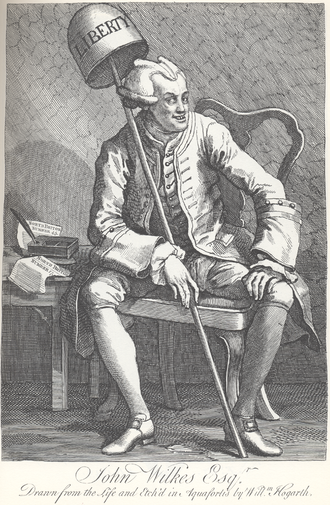

Audrey Williamson. Wilkes: ‘A Friend to Liberty’. 254 pages. Illustrated. George Allen & Unwin. 4.95.
Following her excellent biographical study of Thomas Paine, Audrey Williamson has now given us one on another radical reformer, John Wilkes. Unlike Paine, Wilkes has been the central subject of many a learned book and article, and has not had the dead weight of the political ‘establishment’ move heaven and earth, so to speak, to smear his reputation, rather, whatever his early radicalism, they have sought to make him one of the historical figures of the ‘establishment’, as in later life he actually was.
There are many facets to the life of Wilkes; the radical reformer and writer, enemy of the Tory establishment; the amorous ‘man-about–town’ and member of the notorious Hell-Fire Club; the civic official and man who ordered troops to fire on and into a crowd of. workers. Whatever his good deeds this last act has sullied his reputation for ever, for with it, and despite any excuse that might be made, it demonstrated that he had changed sides.
All the many aspects of Wilke’s life are dealt with fully by Miss Williamson, who blends a warmness towards her subject with the objectivity so essential to a good biographer, thus we do not get a whitewash job from which Wilkes emerges spotless, a man beyond reproach. However, I do feel that there is a slight tendency to play down the change of sides so evident a characteristic of Wilke’s later years. Perhaps in modern terms Wilkes was the revolutionary turned moderate, however, it is the early and middle years of Wilke’s life that are the most interesting, and in this very readable work they come to life.
Readers of Audrey Williamson’s book on Paine will know that as a biographer she does not simply accept at face value what others wrote of her subject, thus giving us a ‘rehash’, which is all too often the case with many a biography; Miss Williamson checks on the facts behind the story, and her re-examination of the original material produces both new information and corrects errors. In this work will be found some important new data bearing directly upon a possible connection between Paine and Wilkes, and suggesting that further investigation might produce in its turn a whole new chapter on the obscure early days of Paine.
Wilkes: ‘A Friend to Liberty’, is a book which I have no hesitation about recommending. It is well written, well researched, excellently illustrated, and with a good index. Its price is regrettably high, but then this is an inflationary era. Whatever my personal reservations about Wilkes there is no doubt that he holds an important place in the history of social reform, and this book should introduce him to a new generation of students, or simply those curious about how our political institutions evolved.