
By Robert Morrell

The Political Works Of Thomas Spence, edited by H.T. Dickinnon. viii and 154pp. Paperback. Avero (Eighteenth-Century) Publications, Newcastle-upon-Tyme.
IT IS PERHAPS apt that this useful hook should be published in the town where Spence was born, and where he spent his early years, for I suspect that he is almost as unknown there as he is amongst many students of radical history, who certainly should know better.
Thoaas Spence never exhibited the rungs of political interests many of his contemporary radicals did, nor, as Professor Dickinson shows in his introduction, did he fully grasp the complex changes taking place in notoriety as the Industrial Revolution made its mark. Spence viewed the answer to problems primarily in terms of the expropriation of land and a return to an economic system based on small farms, a concept which ties him in with some inter anarchist thinkers, or even our current ecologists, who want to turn away from industrial society to a more simplistic rural-craft type economic system — though anarchists would like to see the end of the monetary system.
Spence’s basic idea was flawed, and his critics were quick to point out, for though private ownership of land would have been abolished, those from whom it was to be expropriated would be permitted to keep their substantial private wealth, including livestock. such as sheep, and as land could be rented, the door ran left Tide open to a return eventually to the old system.
Because his land plan occupied so much of Spence’s attention, he did not give too much thought to other important matters, and no while he attracted a small group of supporters who sought to continue the promotion of his plan after his death in 1814, it did not last, however, individuals did continue to hold his basic theme and were found advocating land expropriation in Chartist circles and the early trade unions.
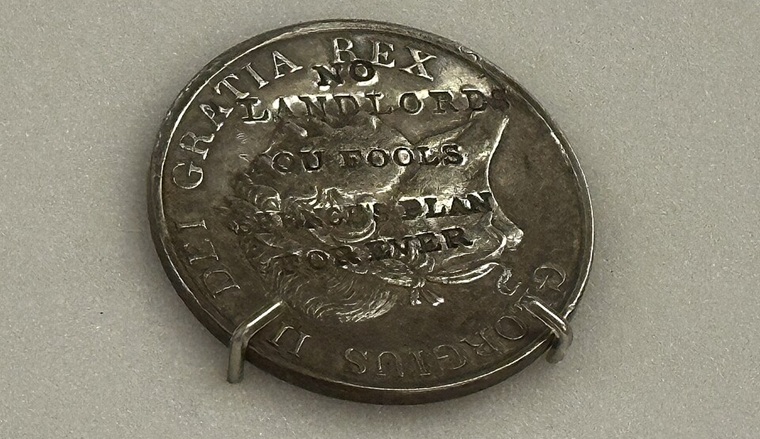
This well produced book brings together the most important of Spence’s political writings, though consideration of his attempts to promote some of his ideas through the use of political tokens is largely ignored, and there is but brief reference to his pioneering of a phonetic alphabet system. Hopefully it will bring this such neglected figure to the attention of students of radical history for it provides the text of his works, works which cannot be found in a great many libraries. This is indeed a very valuable work.