
By Eric Paine
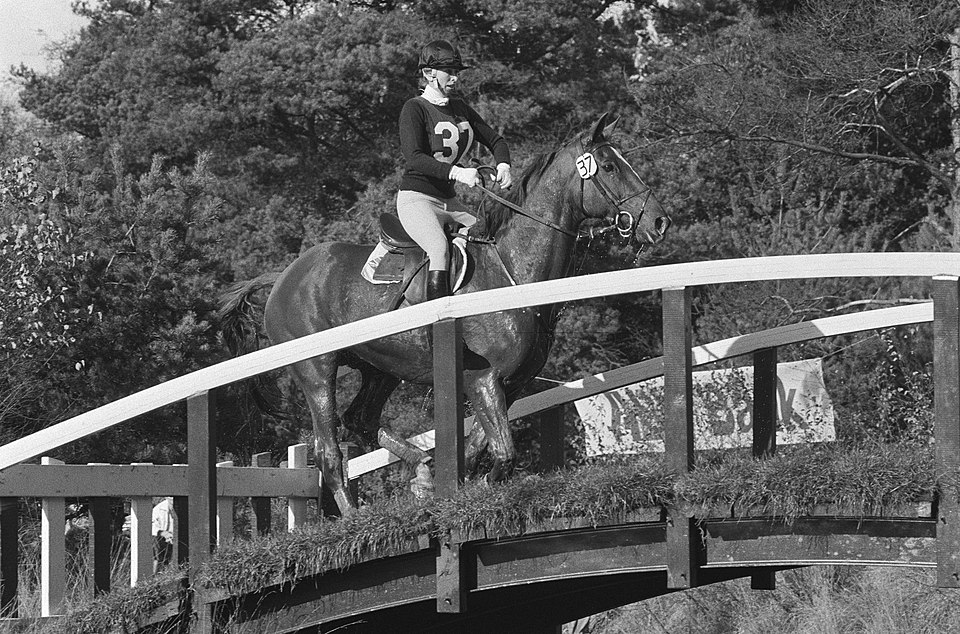

As I sat listening to the speeches at the Sunday Observer 200th Anniversary of their own foundation and of the publication of Rights of Man, my mind wandered as Princess Anne was giving the Thomas Paine Lecture, to his thoughts on titles. ‘Titles baffle even the powers of fancy and are chimerical nonsense’, he wrote. However, it was particularly appropriate for The Observer to link their own anniversary with that of Rights of Man, as Paine and Paineites were in the vanguard for the fight for freedom of the press.
There were eight of us present from the TPS, by kind permission of the newspaper, to hear Princess Anne, Donald Trelford, Editor of The Observer, and Edward Du Cann speak. The princess clearly respected Paine, albeit in a slightly whimsical manner, and it was great to hear his name mentioned so often with admiration. Our rather ambivalent feelings at being there at all were eased by the fact of the event being in aid of Save the Children Fund, of which the princess is president.
However, I could not bring myself to call Princess Anne, “your Royal Highness”, when introduced to her (I think Thomas Paine may have got on well with her as both liked horses), good egg as she obviously is, in a haughty sort of way. I cannot see justification for the very high class social security that royalty and its hangers on receive. Probably to most people in Britain the continuance of royalty, or not, is hardly a burning issue, but glancing through Whitakers Almanac recently made me realise how strongly feudal elements remain in this country, and how much is shelled out to archaic remnants.
The Queen’s annuity, tax free, of course, is approximately four and a half million pounds. She has fifty-eight household staff, twenty-seven in the Privy Purse and Treasurer’s office. The Lord Chamberlain’s office has sixty-five people, the Royal Collection office twenty. Her ecclesiastical household numbers fifty-nine people and there are thirteen medical staff, while the Master of the Household has a staff of twenty. There are also household staffs for each of the other royal households. No doubt the dubious origins of the Queen’s private estate pays for some or most of this, but Thomas Paine would not be amused to find that after 200 years many amusing and quaint offices still exist. These include, Women of the Bedchamber, Ushers, Keeper of the Jewel House, Keeper of Swans, Clerk to the Closet, Apothecary, Bargemaster, etc. There is little merit in the Queen paying for her horses and their upkeep from her private estates when we reflect on how they fell into her lap.
The Queen Mother receives approximately half a million pounds, the Duke of Edinburgh three quarters of a million, the Duke of York, £189,000, Princess Anne, £154,000, Margaret, £148,000. The Duke of Kent gets £161,500, Princess Alexandria £154,000, the Duke of Gloucester, £119,000, Prince Edward, £20,000. Add to this the twenty-five other dukes, 220 earls, 150 viscounts, 900 barons (420 hereditary) plus thousands of baronettes, knights, privy councillors, members of ancient orders such as Garter, Thistle, etc., and the holders of Empire Crosses (though we no longer have an empire), which together constitute a formidable bulwark for the continuation of monarchy and social divisions. Having a vested interest in its continuation, they operate a kind of superficially soft-sell KGB to maint..in the status quo. Because, thankfully, Communism has collapsed in Russia, we should not ignore the abuses of the opposite extreme.
The unelected House of Lords, which Thomas Paine attacked, is still there and likely to remain so until we have a proper written constitution, Bill of Rights, proportional representation, etc. The first thing is that every nation has a right to establish a constitution’, said Paine. The sums paid to those attending the House of Lords daily when it sits must be collectively considerable, added to which is the administrative and other costs. This is a waste of tax payers money, considering how little real power the Lords has. Peers daily allowances (1988 figures) are as follows: overnight accommoda- tion £57, day subsistence and incidental travel, £21, secretarial expenses, £22, and they have the right to recover travelling expenses, probably 1st class, between their estates or homes and London.
In December 1988 there were twenty-six bishops (including vo arch-bishops), 784 hereditary peers, 379 life peers (65 female) entitled to attend. At this time twenty-one lords were members of the government, which speaks volumes about the evils of Thatcherism. There were also 84 peers without writs, 169 on leave of absence and 12 disclaimed for life. Average daily attendance in 1987-88 was said to be 333.
One wonders if they were all in committee when the House of Lords is shown on TV. No doubt there are some really good public spirited members of the Lords, but Thomas Paine’s sweeping assertion that nobility meant NOABILITY, is probably true for the majority.
As to monarchy and its residual powers, with full Europeanisation nearly upon us, something which Thomas Paine would have endorsed if properly constituted, the time is long overdue for a referendum on whether the House of Lords should continue or not. This masquerade should have long been over.