
By John Smith
THOMAS PAINE went with me to Africa in a quite a roundabout way. I was one of those young impressionables in 1959 who thought Fidel Castro was going to save the world. Today, we thought it would be Cuba, with the dreaded Batista routed; tomorrow it would be the world.
Still now, thirty-three or more years later, I feel Fidel let me down just like he let Cuba down.
And still the world needs saving.
I had been too young for Gandhi and India’s independence to have any influence on me. But I remember Mumma leading his people to freedom and adding the new name of Ghana to my atlas. And I remember Ho Chi Min erasing an old name: French Indo China.
For a time it seemed as if the movement towards self-determination and away from imperialism was unstoppable. Leaders emerged demand ing to be heard, from Makarios to Kenyatta, from Dom Mintoff to Gough Whitlam, they came and they went. And still the world needs saving.
Later, no longer so impressionable, I had begun to discern feet of clay in my heroes. What to do about it? Each of us had, I concluded, to be our own revolution, our own heroes. That was our only responsibility. The only thing we could hope to change was ourselves.
I can’t remember exactly how I came to Thomas Paine. Or when, but it seems long ago. It isn’t like remembering where I was when I heard about Kennedy’s assassination or Armstrong’s giant step for mankind or Thatcher’s resignation.
Sometimes it occurs to me I came to Paine negatively, through my `antis’. I was anti-Tory, anti-religion, anti-monarchy, anti-establishment, anti-imperialism, anti-privilege, anti-oppression. I still am.
However I came to him, Paine showed me how to be positive about my ‘antis’. It was a vital lesson in personal revolution. A voice that spoke to me across two centuries taught me common sense. It taught me to be myself. It taught me how to be free to live in the present. It reassured me, in ringing terms, that I was not alone, that someone else had had the same thoughts, the same ‘antis’.
Paine though had the added genius of communication. “The vanity and presumption of governing beyond the grave,” he said, “is the most ridiculous and insolent of all tyrannies.” Then he added the most radical and liberating words which took my thoughts to an altogether higher plane. He said, simply, “Man has no property in man; neither has any generation a property in the generations which are to follow.”
Like the hero in the old Victorian adventure story, in one bound I was free. It was wonderful to know no-one owned me. It was even more wonderful to know that I didn’t own my children. I didn’t own anybody. Now I could start living. Now it didn’t matter that heroes had feet of clay.
I share many frailties with Paine, among them a sort of idealized romanticism, a utopianism which is the inevitable side-effect of knowing there’s a better way of doing things.
April 9th 1992 was election day. It was wonderful, warm and sunny. I voted early then sat in my garden. I watched a pair of greenfinches taking the peanuts I’d hung in the tree. The radio in the kitchen was playing Beethoven’s third symphony, the Eroica. I thought about the election and about the future. It was a perfect English spring and everything was possible.
Later, of course, with the results, nothing was possible. The people had voted as they’d been told. They’d been persuaded by a talentless and incompetent government that they should lock their doors and trust to the market and pray the next redundancy wasn’t theirs. There was no such thing as society. There was no public good. There was only private good. There were only shiny private teeth in rotten public gums in a land too mean to save itself.
Sadly I thought about what Paine had had to say about party politicians in general and the Tories in particular: “…men who went no further with any principle than as it suited their purpose as a party; the nation was always left out of the question; and this has been the character of every party from that day to this.”
I wondered about the power of the British establishment to survive and perpetuate itself and I recalled the words of one of Paine’s biographers: “The monarchy and the aristocracy seem to him such absurdities that he simply overlooked the fact that they enjoyed a very considerable, grudging respect. He overrated (the people’s) readiness to militate for their rights because he underrated their habit of subordination” (AJ.Ayer. Thomas Paine. p.111).
I used to have to travel to visit a one party state. Now I live in one.
Whenever I travel I take a copy of Rights of Man with me in the hope I can give it away. The irony is that the very first one I took to Africa I gave to an Englishman who returned home before I did (I also, incidentally, in Paris earlier this year, gave the TPS badge I was wearing to a young French student who was working his vacation as a ticket collector at the top of the Eiffel Tower. He said he was studying the Girondins and claimed to know ‘all about’ Paine.
The work I am currently involved in is part – a very small part – of this country’s aid to Nigeria. I am an independent contractor. My contribution is in the areas of management information systems and strategic planning. It’s very rewarding work and a great privilege to have the opportunity to influence people and businesses.
It’s also a great feeling to deliver Rights of Man and Common Sense on airline tickets paid for by the British government.
The problems facing Nigeria are a microcosm of the problems facing the world – corruption, religious wars, xenophobia, over population, depletion of resources, poverty, starvation, civil unrest – the list is as endless as the future is uncertain. The world has never needed common sense more than it does today. Despite the problems, Nigeria still has a lot going for it. It has a dynamic and lively free press with so many titles I seem to find a new one every day. They are, almost without exception, unequivocal defenders of democracy and republicanism.
The land has immense natural resources – oil, gas, minerals, forests and people.
Best of all Nigeria has education – between 60 and 70 percent of children of primary school age go to school.
As J.K. Galbraith, a great liberal thinker in the Paine tradition has pointed out – ‘We must remind ourselves that in this world there is no literate population that is poor and no illiterate population that is anything but poor’.
Nigerians I’ve spoken to about this thank the colonialist British for their country’s education policies.
The colonialists took their lead from the early Scottish Presbyterian missionaries who came to Calabar in the far east of the country with the slave trade.
Before Paine made his first Atlantic crossing, the notorious ‘slave triangle’ – from Liverpool to Calabar to the Caribbean and back to Liverpool – was one of the world’s major trade routes. Paine’s writing led the world towards the movement to abolish slavery. But I’m sure he would have had mixed feelings about the missionaries – what a freer place Nigeria would have be if it had their educational legacy without their religious legacy. Religion was at the heart of the civil war which saw ‘Christian’ Biafra trying to free itself from the western and northern parts of the country which are predominantly Muslim areas.
Like the US, which in many respects is something of a role-model for Nigeria, the wounds of the civil war have largely healed. Thus the country has compressed an awful history into its thirty-two year independence.
Calabar can trace its beginnings back to 15th century Portuguese traders. It is a pleasant place, renowned throughout Africa for its beautiful food and its wonderful women. Many of its streets are named after British missionaries and colonial rulers; Mary Slessor is buried there; it has a fine museum and one of the oldest institutes of learning in West Africa – and almost certainly the one with the most spectacular view – its original buildings were replaced in 1892 and are still in use on a promontory high above a huge sweeping bend in the Calabar River.
Slavery, like defeat in the Biafran war, seems little more than part of history and certainly no cause for resentment. So much so that the biggest statue in the city is of an 18th century king – a contemporary of Paine’s – who sold four hundred and ninety-five thousand of his countrymen as slaves. This is King Basseyduke.
Lagos, at the other end of the country, is an altogether wilder place. It is a huge, sprawling capital city built on islands in lagoons linked by mile after mile of concrete dual carriageway causeways. It has a `downtown’ skyline, similar to that of a small US city, huge cathedrals, mosques and palaces. It has pockets of safe, rich exclusivity surrounded by the direst poverty. It has a huge underclass who live outside the law. Large areas of the city are unsafe after dark. Some are unsafe all the time. It is hot and rainy. Life is cheap in Lagos and the water is soft as silk.
These are two extremes. Both are coastal cities.
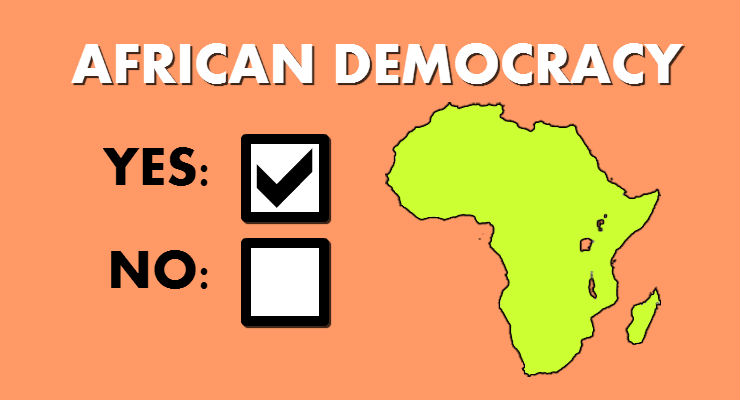
Inland, to the north, the Muslim power brokers have their strongholds. The President, who took power in a military coup, is just completing the building of a shiny new capital city near his tribal home, at a place called Abuja. This is in readiness for his declared intention to hand over power to a democratically elected civilian president on January 2nd. 1993.
No poverty is allowed in Ajuba and no untidiness. Nothing is allowed that might make the President uneasy in his last six months in office. In many ways he is a good man, strong enough to lead and brave enough to know when it’s time to go* (unlike Fidel).
Paine, I am sure, would be sensitive to his, and the country’s problems and to the solutions that he has proposed. I’m also sure Paine would be a constant thorn in his side to make sure he kept his part of the bargain, and didn’t entertain ideas of making a comeback if the future’s not to his liking.
Democracies have to make their own mistakes.
Paine would. I’m equally sure, be sensitive to the culture in which his message is being delivered, after all, isn’t that what common sense is about?
It is fashionable in the US for black history to be more and more portrayed as a stand-alone culture, independent of, and separate from, what it calls `DWEM’ culture – Dead White European Males.
I am always aware, in Africa, of Paine’s undeniable TWEM-ness’ in terms of that argument. So potentially, one runs the risk of being at best patronising and at worst guilty of the very cultural imperialism the DWEMs themselves are perceived to be guilty of.
Paine’s genius though, transcends continents and races just as it does centuries. Man whose rights he champions is undifferentiated. The message is as relevant and pressing today in Africa as it was in 1791 in Europe and America.
That is truly heroic.
After all, as I never tire of telling anyone who’ll listen, Paine summed up the problems of the world for me when he said, in introducing his Common Sense, “…a long habit of not thinking a thing wrong, gives it a superficial appearance of being right, and raises at first a formidable outcry in defence of custom”.
*The president remains, having, it seems, postponed handing over power